
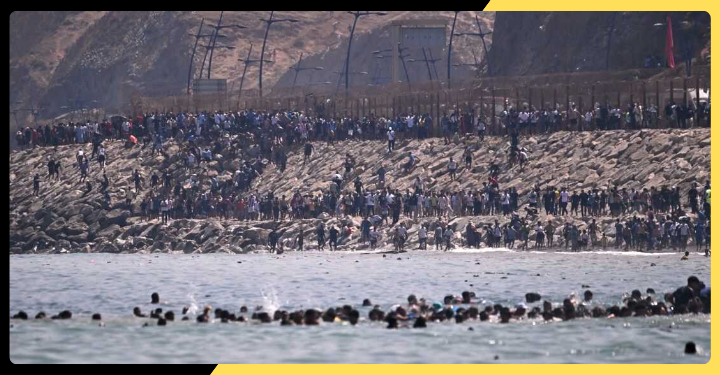
For thousands of migrants from Africa and other parts of the world, Spain represents far more than a European destination—it symbolizes safety, opportunity, and the possibility of a better future. Every year, many people leave their homes and undertake dangerous journeys across deserts, forests, and seas, hoping to reach Spanish territory. Despite the risks of drowning, injury, arrest, exploitation, or even death, they continue to make the journey because they believe the potential rewards outweigh the dangers.
One of the primary reasons behind irregular migration is economic hardship. Many migrants come from countries where unemployment is extremely high, wages are low, and access to education and healthcare is limited. Even skilled workers often struggle to find stable employment. For young people, especially, the lack of opportunities can make migration appear to be the only realistic path toward improving their lives and supporting their families.
Poverty is closely linked to this economic challenge. In several African nations, families survive on very limited incomes and face food insecurity, inadequate housing, and poor access to public services. Climate change has made these conditions even worse in some regions, with prolonged droughts, desertification, and crop failures reducing agricultural productivity. As traditional livelihoods disappear, many people are forced to seek opportunities elsewhere.
Another major driver is conflict and political instability. Wars, civil unrest, and armed violence have displaced millions of people across Africa and the Middle East. Individuals fleeing these conditions often have little choice but to leave their homes in search of safety. Some are refugees escaping persecution, while others are internally displaced people who eventually decide to continue their journey toward Europe after finding few opportunities in neighboring countries.
Human rights abuses also push many migrants to leave. In some countries, people face persecution because of their political beliefs, ethnicity, religion, or social background. Others may experience arbitrary detention, violence, or discrimination. For these individuals, migration is not only an economic decision but also a matter of personal safety and survival.
Spain has become a key destination because of its geographical proximity to Africa. The Spanish enclaves of Ceuta and Melilla share land borders with Morocco, making them the only land borders between Africa and the European Union. Spain is also relatively close to North Africa across the Mediterranean Sea and the Atlantic Ocean, making it one of the nearest European entry points for migrants traveling from the continent.
However, reaching Spain is far from easy. Many migrants spend months or even years traveling through multiple countries before arriving in Morocco. During this journey, they often encounter dangerous conditions, including harsh weather, food shortages, criminal gangs, and human traffickers. Some are robbed, extorted, or subjected to violence. Others are forced to work under exploitative conditions to finance the next stage of their journey.
The role of smuggling networks has become increasingly significant. These criminal organizations charge migrants large sums of money in exchange for transportation or assistance in crossing borders. In many cases, smugglers provide false information about the likelihood of success or the risks involved. Migrants may be placed in overcrowded boats, hidden in trucks, or encouraged to participate in dangerous mass attempts to breach border fences.
Despite these dangers, stories of successful migration continue to inspire others. Migrants who reach Europe often send money home to support their families. These remittances can provide food, education, healthcare, and housing for relatives, creating a powerful incentive for others to attempt the same journey. While many migrants do not achieve the life they hoped for, the perception of greater opportunities in Europe remains strong.
Social media has also influenced migration patterns. Through online platforms, migrants can share information about routes, border conditions, and asylum procedures. At the same time, misinformation can spread quickly, leading some people to underestimate the risks or overestimate their chances of entering Europe successfully.
European governments, including Spain, have responded by strengthening border security, increasing surveillance, and cooperating with neighboring countries to prevent irregular migration. While these measures have reduced some unauthorized crossings, they have also encouraged migrants to seek alternative and often more dangerous routes. This has contributed to repeated humanitarian crises in the Mediterranean and along Europe’s land borders.
The decision to migrate is rarely simple. For many people, it is the result of a combination of economic hardship, insecurity, limited opportunities, and hope for a better future. Understanding these underlying factors is essential for addressing the migration crisis. While stronger border controls may reduce irregular crossings, long-term solutions also require investment in development, conflict resolution, legal migration pathways, and international cooperation to address the root causes that compel people to leave their homes.
Journalist Details

- Jitendra Kumar is an Indian journalist and social activist from Hathras in Uttar Pradesh is known as the senior journalist and founder of Xpert Times Network Private Limited.
Latest entries
 World NewsOctober 11, 2026Hydropower Project and Bridges Damaged as Nepal Floodwaters Surge
 Latest NewsOctober 10, 2026Delhi on High Alert as CJP Protest Draws Attention to Electoral Roll Revision Controversy
 Latest NewsOctober 8, 2026Fresh FIRs Against Rahul and Priyanka Gandhi Add Fuel to Escalating SIR Protests
 NewsOctober 7, 2026Rahul Gandhi, Priyanka Gandhi Among Opposition Leaders Detained After Delhi Protest