
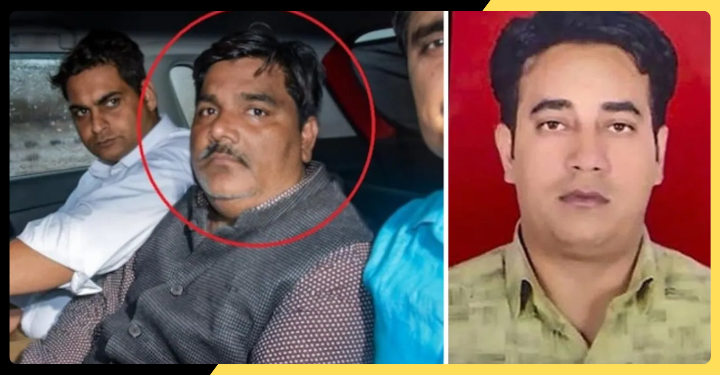
A Delhi court has sentenced former Aam Aadmi Party (AAP) councillor Tahir Hussain to life imprisonment for the murder of Intelligence Bureau (IB) officer Ankit Sharma during the 2020 northeast Delhi riots. The judgment is one of the most significant verdicts delivered in connection with the communal violence that engulfed parts of the national capital in February 2020. After examining the evidence presented during the trial, the court convicted Hussain on charges including murder, criminal conspiracy, rioting, unlawful assembly, and related offences. While pronouncing the sentence, the judge described the killing as an act of “savagery” that shocked the conscience of society.
The conviction follows years of legal proceedings that included detailed investigations, forensic examinations, witness testimonies, and arguments from both the prosecution and the defence. The case has drawn nationwide attention because it involved the death of an Intelligence Bureau officer during one of the most violent episodes in Delhi’s recent history.
Ankit Sharma, aged 26, served as a Security Assistant with the Intelligence Bureau. On February 25, 2020, he left his home in northeast Delhi as communal clashes intensified across several neighbourhoods. When he failed to return, his family began searching for him and later informed the authorities. The following day, Sharma’s body was recovered from a drain near Chand Bagh, close to the area where violent clashes had occurred.
The post-mortem report revealed multiple stab wounds and numerous blunt-force injuries across his body, indicating that he had been subjected to an exceptionally violent assault before his death. The gruesome nature of the injuries became one of the central elements in the prosecution’s case and was repeatedly referred to during the trial.
According to the prosecution, Tahir Hussain played a key role in planning and facilitating the violence. Investigators alleged that Hussain’s house functioned as a base from which stones, petrol bombs, acid packets, and other materials were collected and distributed to members of the mob. Police claimed that CCTV footage, drone images, mobile phone location records, forensic reports, and witness statements established his involvement in the conspiracy.
The prosecution argued that Hussain was not merely present during the riots but actively participated in organizing unlawful assemblies that attacked members of the public. Prosecutors maintained that Ankit Sharma became one of the victims of the violence allegedly orchestrated by the accused and his associates. They asserted that the evidence clearly demonstrated Hussain’s participation in the conspiracy that resulted in Sharma’s murder.
The defence rejected these allegations throughout the proceedings. Hussain’s lawyers argued that he had been falsely implicated because of his political background and insisted that no direct evidence proved he had personally assaulted Sharma. They also stated that Hussain had contacted police officials seeking protection during the riots, claiming that he and his family were themselves trapped by the violence. The defence questioned the reliability of several prosecution witnesses and challenged the interpretation of electronic and forensic evidence.
Despite these submissions, the court ruled that the cumulative evidence established Hussain’s guilt beyond reasonable doubt. The judge observed that the murder was exceptionally brutal and represented a grave offence against both the victim and society. However, after considering the legal principles governing sentencing, the court decided that life imprisonment, rather than the death penalty, was the appropriate punishment.
Members of Ankit Sharma’s family welcomed the verdict, saying they had waited more than six years for justice. They expressed hope that the judgment would send a strong message that those responsible for communal violence and targeted killings would be held accountable under the law. The family also acknowledged the efforts of investigators and prosecutors who pursued the case over several years.
The February 2020 Delhi riots remain one of the darkest chapters in the city’s recent history. Violence erupted amid tensions surrounding protests over the Citizenship Amendment Act (CAA) and quickly spread across northeast Delhi. The clashes resulted in the deaths of more than 50 people, injuries to hundreds of others, and extensive destruction of homes, shops, schools, religious places, and public infrastructure. Thousands of residents were displaced, and the economic losses ran into crores of rupees.
Law enforcement agencies launched extensive investigations into numerous incidents connected with the riots. Hundreds of First Information Reports (FIRs) were registered, and several individuals from different backgrounds were arrested in connection with various offences. The trial involving Tahir Hussain emerged as one of the most prominent because of the high-profile victim and the political profile of the accused.
Legal experts note that Hussain has the right to challenge both his conviction and sentence before the Delhi High Court. Under Indian law, every convicted individual is entitled to appeal against a trial court’s decision. If an appeal is filed, the higher court will examine the evidence, legal findings, and sentencing before reaching its own conclusion.
The verdict has also reignited discussions about accountability for communal violence, the importance of timely investigations, and the role of public representatives during periods of civil unrest. While political reactions have varied, the court’s judgment is based on the evidence presented during the judicial process rather than political considerations.
As appeals and other riot-related cases continue through the legal system, the conviction of Tahir Hussain stands as one of the most consequential judicial outcomes arising from the 2020 Delhi riots. For Ankit Sharma’s family, the judgment offers a measure of justice after years of grief and legal proceedings. For the Indian justice system, it represents another significant step in addressing one of the country’s most closely watched cases of communal violence.
Journalist Details

Latest entries
 Latest NewsOctober 12, 2026Rahul Gandhi and Mallikarjun Kharge Face Setback Ahead of Planned Supreme Court March
 World NewsOctober 5, 2026Brazil Vote Tightens as Bolsonaro Falls Short of Decisive Victory
 Latest NewsOctober 1, 2026Two Lethal Injections Fail to Kill Tennessee Death Row Inmate Christa Pike
 Latest NewsSeptember 26, 2026Election Commission Says Differing Opinions Are Normal, Final Decisions Unanimous