
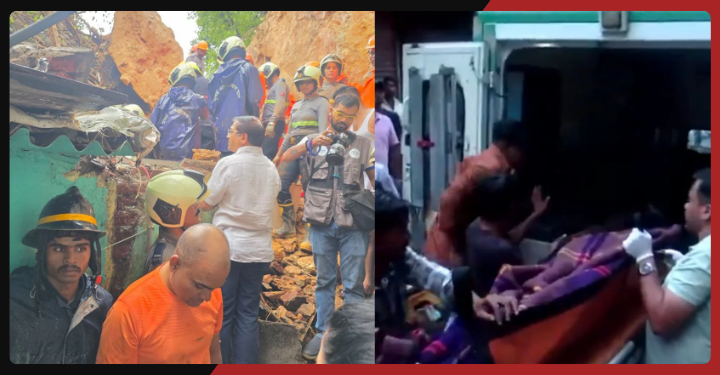
A sudden landslide in Mumbai’s Kurla area has left several families devastated after debris struck the Gaushiya Chawl in Chirag Nagar during the early hours of Wednesday. Initial reports said five people had died and six others were injured. Later updates reported that the death toll had climbed to six as rescue operations continued.
The disaster reportedly happened around 3:48 am, a time when most people in the affected neighbourhood were asleep. The darkness and heavy rainfall made it difficult for residents to react quickly.
People living near the site were reportedly alerted by the sudden collapse and movement of debris. Emergency calls followed, bringing rescue personnel to the area.
The Mumbai Fire Brigade and other emergency teams began searching through the debris. Rescue operations at a landslide site require extreme caution because loose earth can continue to move after the initial collapse. Workers must therefore carefully remove debris while ensuring that the operation itself does not put trapped victims or rescuers at greater risk.
The injured were transported to hospitals for medical attention. Meanwhile, relatives and neighbours waited anxiously for information about those caught in the incident.
The Kurla tragedy is particularly significant because it occurred in a densely populated urban environment. Mumbai’s rapid growth has resulted in residential settlements expanding into areas that can be exposed to natural hazards. During the monsoon, those risks can become more severe.
Heavy rain can saturate soil and reduce its strength. When water penetrates into the ground over a period of time, slopes may become unstable. If there is already a vulnerable section of land, additional rainfall can trigger a sudden landslide.
Mumbai has experienced similar rain-related tragedies in previous years. Landslides, building collapses and flooding have repeatedly caused deaths during intense monsoon spells. The latest Kurla incident has therefore renewed calls for stronger monitoring of vulnerable areas.
Authorities are expected to examine the circumstances surrounding the landslide and assess the condition of nearby structures. Such assessments can help determine whether additional residents need to be moved to safer locations.
For local residents, however, the immediate concern remains safety. Heavy rainfall can continue to create dangerous conditions even after a landslide has occurred. Waterlogged soil may remain unstable, while additional rain can increase the possibility of further movement.
The casualty figures also changed as the rescue operation progressed. The initial report cited five deaths and six injuries, while later reports said six people had died.
Such changes are common during major emergencies because rescue workers initially have incomplete information. Authorities must identify victims, transport the injured and verify the status of people reported missing.
The Kurla disaster has left the local community facing grief and uncertainty. Families who began the day expecting an ordinary Wednesday instead found themselves dealing with a devastating emergency.
As rescue operations continue, the incident is likely to become part of the wider discussion over Mumbai’s monsoon preparedness. The tragedy raises questions about how vulnerable settlements can be protected and how authorities can identify dangerous slopes before heavy rainfall turns them into disaster zones.
Journalist Details

- Jitendra Kumar is an Indian journalist and social activist from Hathras in Uttar Pradesh is known as the senior journalist and founder of Xpert Times Network Private Limited.
Latest entries
 Crime NewsOctober 13, 2026Hyderabad Police Investigate Suspicious Death of 29-Year-Old Software Engineer
 World NewsOctober 11, 2026Hydropower Project and Bridges Damaged as Nepal Floodwaters Surge
 Latest NewsOctober 10, 2026Delhi on High Alert as CJP Protest Draws Attention to Electoral Roll Revision Controversy
 Latest NewsOctober 8, 2026Fresh FIRs Against Rahul and Priyanka Gandhi Add Fuel to Escalating SIR Protests