
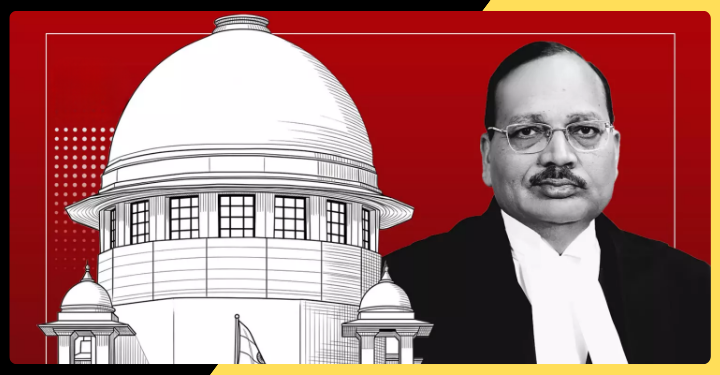
The Supreme Court has begun examining allegations of excessive police action during protests at Jantar Mantar, bringing renewed focus on the difficult balance between the right to protest and the responsibility of authorities to maintain public order.
The proceedings relate to petitions alleging excessive use of force against students participating in demonstrations over examination irregularities and alleged paper leaks. The protests reportedly included demands for accountability and action over concerns affecting students and examination candidates.
The issue has become particularly significant because Jantar Mantar is one of Delhi’s most prominent protest locations. Over the years, the site has hosted demonstrations by students, political groups, workers and civil society organisations. However, protests in the national capital can also create serious security and traffic challenges, particularly when demonstrators attempt to move towards restricted areas.
The Supreme Court, however, has stressed that the mere presence of agitation cannot automatically justify police excess. Chief Justice Surya Kant observed that peaceful and lawful protest is constitutionally protected. This means authorities must distinguish between a peaceful demonstration and a situation involving genuine violence or an immediate threat to public safety.
The distinction is crucial. Police forces have the responsibility to prevent violence, protect people and control situations that may become dangerous. But the use of force must remain proportionate to the threat. If a peaceful crowd is treated in the same manner as a violent mob, questions can arise regarding the legality and necessity of the police response.
The court has indicated that allegations of excessive force should be independently investigated. Such an investigation could examine video recordings, CCTV footage, body-camera footage and other available evidence. It could also determine whether warnings were issued before force was used and whether the action was targeted or indiscriminate.
The petitions reportedly seek investigation into the alleged conduct of police and security personnel. The petitioners have also raised concerns regarding the preservation of electronic evidence and the treatment of injured protesters.
At the same time, the Supreme Court has recognised that police personnel were also injured during the incidents. A request by family members of injured police officers to participate in the proceedings was accepted. The bench made it clear that injuries suffered by police officers and protesters are both matters of concern.
This aspect may become central to the legal proceedings. The court is likely to examine the entire sequence of events rather than relying on only one side’s version.
The court’s call for uniform protocols could also have long-term consequences. At present, different police forces may follow different approaches when dealing with demonstrations. Clear national guidelines could provide greater clarity on warnings, barricading, negotiation, dispersal methods and the circumstances in which force may be used.
For citizens, the case highlights that peaceful protest remains a central democratic tool. For police agencies, it emphasises the importance of restraint, accountability and professional crowd management.
The Supreme Court’s intervention therefore goes beyond one incident. It raises a fundamental question: how should a democracy respond when citizens take to the streets to demand answers? The answer, according to the court’s preliminary observations, must involve both the protection of peaceful dissent and strict action against genuine violence—but never the automatic use of force merely because people are protesting.
Journalist Details

Latest entries
 Latest NewsSeptember 26, 2026Election Commission Says Differing Opinions Are Normal, Final Decisions Unanimous
 Crime NewsSeptember 22, 2026Kalkaji Temple Visit Turns Into Alleged Sexual Assault Case in Nearby Park
 NewsSeptember 20, 2026BMW Flies Off Coastal Road Bridge in Mumbai, CCTV Shows Fatal Crash
 Latest NewsSeptember 17, 2026Disha Salian Case Returns to Spotlight After Rs 500 Crore Legal Demand