
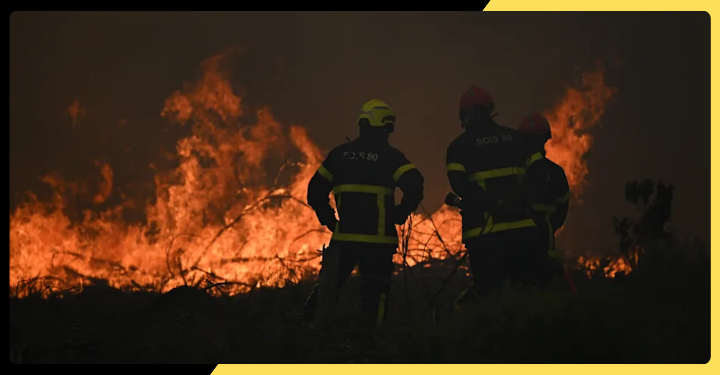
A major wildfire emergency is unfolding in southwest France, where flames have moved dangerously close to the Bordeaux region and forced hundreds of thousands of people to leave their homes. The latest evacuation of another 55,000 people has brought the number of displaced residents in the main Gironde fire zone to approximately 220,000.
Authorities have described the situation as unprecedented. The fire has been burning through dry forests and scrubland, while strong winds have repeatedly pushed the flames into new areas. In some locations, the blaze has created dangerous fire whirlwinds—violent rotating columns of hot air, smoke and flames that can suddenly intensify a wildfire.
The growing threat has placed Bordeaux and nearby communities under increasing pressure. Although the city itself has not been fully evacuated, the fire has approached areas around the city, forcing authorities to prepare emergency shelters and evacuation plans. Transport routes have also been disrupted, and thousands of people have been left uncertain about when they will be able to return home.
The crisis began as a rapidly spreading wildfire in the Gironde region. However, dry vegetation and extreme weather conditions transformed it into a major emergency. Firefighters have faced difficult conditions on the ground, with high temperatures, low moisture and gusting winds making it difficult to establish secure fire lines.
Fire whirlwinds are particularly dangerous because they can create unpredictable fire behaviour. When extremely hot air rises rapidly, it can interact with surrounding winds and produce rotating columns. These formations may throw burning embers into nearby forests and communities, allowing the fire to jump across roads and firebreaks.
France has responded by deploying thousands of firefighters, water-dropping aircraft and military resources. The government has also increased the number of soldiers supporting emergency operations. Authorities have been working not only to fight the fire but also to move residents and tourists away from danger zones.
The evacuation has affected both permanent residents and visitors. Popular areas near the Atlantic coast have been crowded with tourists during the summer season, making evacuation operations more complicated. Some people have been forced to leave at night, while others have had to move more than once as the fire changed direction.
Smoke has created additional health risks. Officials have warned residents to limit exposure to polluted air, particularly vulnerable people such as children, older adults and those with breathing problems. Emergency authorities have also prepared protective masks and additional medical support.
The situation in France comes as other parts of Europe are experiencing similar wildfires. Spain has also been dealing with large-scale fires, mass evacuations and dangerous air quality.
Experts say that climate change is increasing the likelihood of extreme heat and prolonged drought, conditions that make vegetation much easier to ignite. Once a fire begins, high temperatures and strong winds can allow it to grow rapidly.
For France, the immediate priority remains containment and public safety. But the crisis has also become a warning about the changing wildfire threat across Europe. What was once considered an exceptional disaster is increasingly becoming a recurring summer danger.
Journalist Details

- Jitendra Kumar is an Indian journalist and social activist from Hathras in Uttar Pradesh is known as the senior journalist and founder of Xpert Times Network Private Limited.
Latest entries
 Latest NewsSeptember 30, 2026Flydubai Emergency: Pilots Hospitalised After Flight Diverted From Tel Aviv to Saudi Arabia
 NewsSeptember 29, 2026Essar’s $18 Billion US Investment Links Minnesota Iron Ore Mine to Iowa Steel Mill
 Latest NewsSeptember 28, 2026Delhi to Double Parking Charges From November 1 as Winter Smog Measures Expand
 Latest NewsSeptember 27, 2026LPU Unrest Escalates From Campus Protest to Highway Blockade as Police Investigate Rape Allegation