
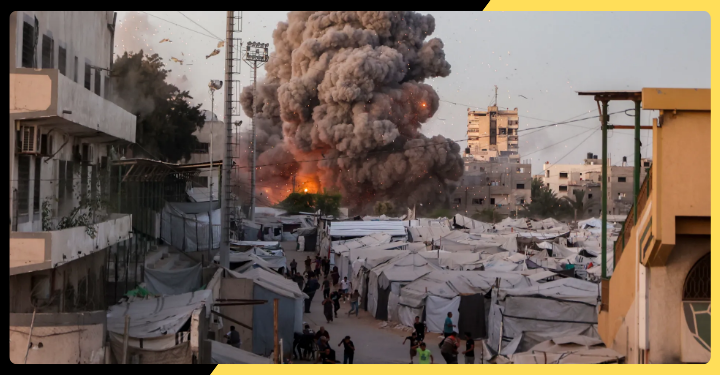
A reported new peace accord concerning the Gaza Strip has sparked international attention after claims emerged that Hamas had agreed to a phased reduction of its weapons under a negotiated framework. If confirmed, the development would represent one of the most significant diplomatic efforts aimed at reducing violence in the region and creating conditions for long-term peace. While the full details of the agreement have not yet been independently verified, the reported framework has generated cautious optimism among diplomats, humanitarian organizations, and regional observers.
According to reports surrounding the proposed accord, Hamas has agreed in principle to gradually reduce its military arsenal under the supervision of an international monitoring mechanism. The process is expected to take place in carefully planned stages, with each phase linked to humanitarian and economic measures intended to improve living conditions in Gaza. Supporters of the initiative believe that combining security commitments with reconstruction efforts offers the best chance for a sustainable peace.
The Gaza Strip has remained at the center of conflict for decades, experiencing repeated rounds of violence that have caused widespread destruction and significant humanitarian suffering. Residential neighborhoods, schools, hospitals, roads, electricity networks, and water infrastructure have all been damaged during successive conflicts. The humanitarian impact has affected millions of civilians, many of whom continue to face shortages of food, clean water, healthcare, and essential services.
The reported peace accord seeks to address both the immediate security situation and the long-term humanitarian crisis. Under the proposed framework, weapons would reportedly be surrendered, secured, or decommissioned through a transparent process overseen by neutral international observers. Independent monitoring would help verify compliance, increase transparency, and reduce the likelihood of future disputes between participating parties.
One of the primary objectives of the reported agreement is to establish a durable ceasefire. By reducing military capabilities while expanding humanitarian assistance, negotiators hope to create an environment in which reconstruction and economic recovery can begin. International donors have repeatedly indicated that long-term investment becomes more feasible when security conditions improve and ceasefire agreements remain stable.
Humanitarian organizations have welcomed reports emphasizing civilian protection. Aid agencies have consistently argued that reducing armed conflict would allow greater access for relief operations and enable the delivery of food, medicine, clean drinking water, shelter materials, and medical equipment to communities in need. Improved humanitarian access could also support the restoration of essential public services that have been severely disrupted.
The proposed accord reportedly includes significant reconstruction commitments. Funding may be directed toward rebuilding homes destroyed during previous conflicts, repairing hospitals and schools, restoring electricity and water networks, and modernizing transportation infrastructure. Such investments are viewed as essential for improving quality of life and creating opportunities for economic growth.
Regional governments have reacted carefully to reports of the agreement. Several countries have expressed support for any initiative that reduces violence while emphasizing that lasting peace requires full compliance by all parties. Diplomatic officials have noted that successful implementation depends on transparency, continued dialogue, and effective monitoring throughout every phase of the agreement.
Security analysts caution that disarmament agreements are rarely straightforward. The surrender or reduction of weapons requires detailed verification procedures, confidence-building measures, and ongoing negotiations to address challenges that may emerge. History shows that maintaining trust among former adversaries remains one of the greatest obstacles in implementing peace agreements.
Political experts also stress that broader issues affecting the Israeli-Palestinian conflict will continue to require diplomatic engagement. While reducing armed activity may lower immediate tensions, lasting regional peace will likely depend on continued negotiations addressing governance, security, humanitarian concerns, and economic development.
For residents of Gaza, reports of a possible peace accord have generated mixed emotions. Many families have endured years of conflict, displacement, and economic hardship. Parents hope that a stable ceasefire could provide children with safer schools, improved healthcare, and opportunities for a more secure future. Business owners also see potential benefits if increased stability encourages investment and expands employment opportunities.
International financial institutions and donor governments may play an important role in supporting reconstruction if the reported agreement moves forward. Investments in housing, healthcare, education, public infrastructure, and local businesses could help strengthen Gaza’s economy while reducing dependence on emergency humanitarian aid.
Despite widespread interest in the reported accord, many practical questions remain unanswered. Details regarding implementation timelines, verification mechanisms, international participation, and enforcement measures have not yet been fully clarified. Diplomats emphasize that successful peace agreements require patience, sustained political commitment, and continuous international support.
If confirmed and effectively implemented, the reported Gaza peace accord could become an important milestone in efforts to reduce violence and improve humanitarian conditions. Although significant political and security challenges remain, the possibility of dialogue replacing confrontation has renewed hopes that diplomacy can contribute to a more peaceful and stable future for the people of Gaza and the wider region.
Note: The scenario in this article is based on the premise you provided. I could not verify that such an agreement has occurred. If you intend to publish this as news, it should be confirmed through reliable sources before use.
Journalist Details

- Jitendra Kumar is an Indian journalist and social activist from Hathras in Uttar Pradesh is known as the senior journalist and founder of Xpert Times Network Private Limited.
Latest entries
 Latest NewsSeptember 30, 2026Flydubai Emergency: Pilots Hospitalised After Flight Diverted From Tel Aviv to Saudi Arabia
 NewsSeptember 29, 2026Essar’s $18 Billion US Investment Links Minnesota Iron Ore Mine to Iowa Steel Mill
 Latest NewsSeptember 28, 2026Delhi to Double Parking Charges From November 1 as Winter Smog Measures Expand
 Latest NewsSeptember 27, 2026LPU Unrest Escalates From Campus Protest to Highway Blockade as Police Investigate Rape Allegation