
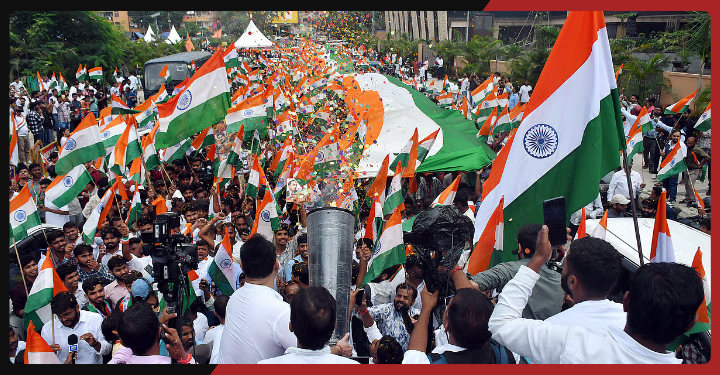
The Jharkhand student protest is approaching another crucial deadline. Student leaders have announced that they will intensify their agitation if their concerns over recruitment examinations are not resolved, including a proposed gherao of Chief Minister Hemant Soren’s residence on August 20. Before that, protesters have announced effigy-burning programmes targeting Soren and Congress leader Rahul Gandhi.
The movement has been driven largely by allegations of irregularities in recruitment examinations conducted by JPSC and JSSC. Students say the credibility of the recruitment process has been damaged and are demanding corrective action.
One of the most prominent demands has concerned the 14th JPSC preliminary examination. During the agitation, students demanded cancellation of the examination and an independent investigation. The government eventually announced the cancellation of the 14th JPSC civil services examination, along with further action involving other examinations.
However, the protesters have continued their agitation.
The reason is that students’ demands are wider than one cancellation. They want structural changes in the way examinations are conducted. This includes transparency, accountability and confidence that recruitment results are based solely on merit.
Students preparing for government examinations often invest substantial amounts of time in preparation. For some, an examination is not merely a test but the culmination of years of planning. When allegations of irregularities emerge, candidates can feel that their entire effort has been placed at risk.
The protests in Ranchi demonstrate how strongly these concerns have resonated among young people. Thousands have participated in marches, while hunger strikes and sit-ins have also become part of the agitation.
The state government has attempted to respond through assurances and administrative decisions. Chief Minister Hemant Soren has said that the government will ensure transparency and reform the examination system.
But the continuing protests suggest that trust remains a major problem.
Trust cannot be restored simply through announcements. Students are likely to judge the government on the implementation of reforms, the transparency of investigations and the accountability of people found responsible for wrongdoing.
The proposed August 20 gherao is therefore being used as pressure by student leaders. By targeting the Chief Minister’s residence, protesters intend to demonstrate that the issue has reached the highest level of the state government.
The plan also creates a major responsibility for the administration. A Chief Minister’s residence is a high-security location, and any large gathering nearby requires careful crowd management. Authorities must ensure public safety while also protecting the protesters’ right to peaceful demonstration.
The events of August 10 provide a warning. Thousands of protesters had marched toward the state legislature, leading to clashes and the use of tear gas, batons and water cannon by police. The administration will therefore be particularly concerned about preventing another confrontation.
The students’ proposed effigy-burning programme may also increase political tensions. Effigy burning is a symbolic form of protest that communicates anger toward political leaders. The decision to include both Soren and Rahul Gandhi indicates that protesters are directing criticism toward the ruling political establishment rather than limiting their anger to recruitment agencies.
At the same time, political parties outside the government have raised similar recruitment concerns. BJP leaders have demanded investigations into allegations surrounding JPSC and JSSC examinations. This means the student movement has become part of a wider political debate.
For the government, one possible way forward is sustained dialogue. Earlier reports indicated that government representatives approached protesters and that the Chief Minister invited a five-member delegation for discussions.
The success of such talks will depend on whether students receive specific commitments rather than general assurances.
The August 20 deadline could consequently become a turning point. If the government can convince protesters that their concerns are being investigated and reforms are being implemented, tensions could decrease. If protesters believe their demands remain unanswered, the proposed gherao could attract an even larger mobilisation.
The fundamental issue remains straightforward: Jharkhand’s young job aspirants want a recruitment system they can trust.
Their movement has already forced examination irregularities into the centre of the state’s political debate. The coming days will determine whether that debate results in institutional reforms or another round of confrontation on the streets of Ranchi.
Journalist Details

- Jitendra Kumar is an Indian journalist and social activist from Hathras in Uttar Pradesh is known as the senior journalist and founder of Xpert Times Network Private Limited.
Latest entries
 World NewsSeptember 25, 2026Artificial Intelligence Emerges as a New Front in the US-China Relationship
 Latest NewsSeptember 24, 2026Nine Passengers Dead, Several Injured in Sleeper Bus Blaze Near Jewar
 Latest NewsSeptember 21, 2026Typhoon Dujuan Brings Torrential Rain to Japan, Disrupting Flights and Rail Services
 Brand StoriesSeptember 21, 2026Sharp Sixx From Mumbai Emerges As One Of The Most Distinctive Acappella Bands Of 2026