
President Donald Trump has issued a strong warning to Iran after the United States launched another round of military strikes and Tehran responded with attacks against American targets in the Middle East.
The latest developments have pushed the long-running confrontation between Washington and Tehran into another dangerous phase. After a period of relative calm, direct military action has returned, raising serious questions about whether the conflict can still be contained.
The U.S. military said its forces struck targets associated with Iran’s Islamic Revolutionary Guard Corps. According to American statements, the operation focused on military systems and infrastructure considered important to Iran’s ability to conduct attacks.
The targets reportedly included air-defense systems, radar installations, communications sites and maritime capabilities.
Washington said the strikes followed concerns over Iranian actions against commercial shipping and American military personnel.
Iran rejected the American justification and responded with its own military action. Iranian forces launched missiles and drones toward U.S. interests across parts of the Middle East, demonstrating that Tehran remained capable of responding beyond its own borders.
Trump defended the American operation and warned that further Iranian retaliation could result in an even more powerful U.S. response.
His comments added another layer of uncertainty to an already tense situation. Strong public warnings from leaders can sometimes serve as deterrence, but they can also increase pressure on the opposing side to demonstrate that it will not back down.
Iranian leaders have repeatedly maintained that attacks on Iranian territory will receive a response. The latest retaliation appears to reinforce that position.
The danger now lies in the possibility of escalation through repeated military exchanges. If one side launches another major operation, the other could feel compelled to respond again.
Such a cycle could quickly become difficult to control.
The conflict is not limited to the United States and Iran. American military forces are stationed across several countries in the Middle East, meaning regional governments could face serious consequences if Iranian retaliation expands.
Security concerns have increased around military bases, diplomatic facilities and commercial shipping routes.
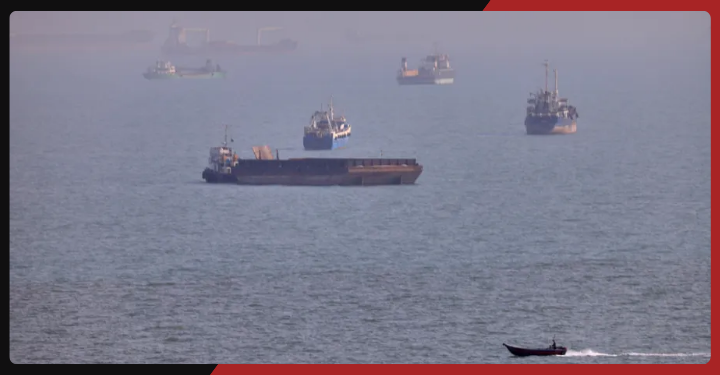
The Strait of Hormuz remains one of the most sensitive areas. Tensions involving commercial vessels have created fears about the movement of oil and other supplies.
Markets responded quickly to the renewed military confrontation. Oil prices climbed sharply as traders considered the possibility of a prolonged disruption in one of the world’s most strategically important energy regions.
Civilian casualties have added another tragic dimension to the conflict. Reports from Iran indicated that residential areas were affected during the latest military action.
The international community is now watching closely to see whether diplomatic channels can reopen. A return to negotiations would require both sides to step back from military escalation, something that currently appears difficult.
Trump’s warning and Tehran’s retaliation have created a tense new reality: neither side appears willing to accept attacks without responding.
The coming days may therefore be decisive. If military operations continue, the conflict could become more dangerous not only for the United States and Iran but also for millions of people living across the wider Middle East.
Journalist Details

Latest entries
 Crime NewsSeptember 22, 2026Kalkaji Temple Visit Turns Into Alleged Sexual Assault Case in Nearby Park
 NewsSeptember 20, 2026BMW Flies Off Coastal Road Bridge in Mumbai, CCTV Shows Fatal Crash
 Latest NewsSeptember 17, 2026Disha Salian Case Returns to Spotlight After Rs 500 Crore Legal Demand
 Latest NewsSeptember 14, 2026Sports Bike Rider Thrown Onto Road After Car Allegedly Chases Her in Gurugram