
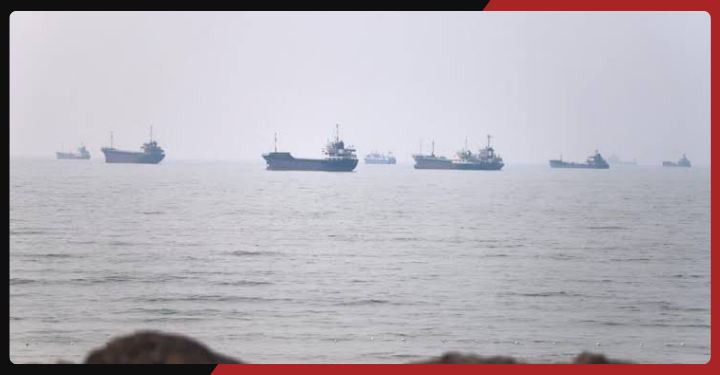
The Strait of Hormuz, one of the world’s most strategically significant waterways, has once again become the center of international attention as Iran announced that its long-awaited agreement with Oman is in the final stages of negotiation. The development comes amid renewed diplomatic optimism, with former U.S. President Donald Trump also signaling that important progress may be underway in the Gulf region. Although officials have yet to reveal the complete details of the proposed accord, analysts believe it could mark a major step toward improving maritime security and regional stability.
The Strait of Hormuz is widely regarded as the world’s most important oil transit route. Stretching between Iran to the north and Oman to the south, the narrow waterway serves as the only maritime passage from the Persian Gulf to the Gulf of Oman and the Arabian Sea. Nearly one-fifth of the world’s oil supply passes through this corridor every day, making it an essential lifeline for global energy markets. Countries including Saudi Arabia, the United Arab Emirates, Kuwait, Iraq, and Qatar rely heavily on this route to export oil and natural gas to customers across Asia, Europe, and North America.
Because of its enormous strategic importance, the Strait of Hormuz has frequently been at the center of geopolitical tensions. Over the years, military confrontations, tanker seizures, drone incidents, and naval patrols have repeatedly heightened concerns about the safety of commercial shipping. Any disruption in the strait has the potential to send global oil prices soaring while creating uncertainty in financial markets worldwide.
Against this backdrop, Iran’s latest announcement has generated considerable international interest. Iranian officials confirmed that negotiations with Oman have reached their final phase, with only technical and procedural matters left before the agreement can be signed. Although the governments have not officially disclosed the full contents of the deal, diplomatic observers expect it to focus on maritime coordination, navigational safety, security cooperation, and mechanisms to prevent misunderstandings between naval forces operating in the region.
Oman has long maintained a unique position in Middle Eastern diplomacy. Unlike many countries that have taken firm sides in regional rivalries, Oman has consistently pursued a policy of neutrality and dialogue. This balanced approach has enabled Muscat to maintain constructive relations with Iran, Gulf Cooperation Council members, the United States, and European nations. Over the past two decades, Oman has quietly hosted several rounds of sensitive negotiations that helped ease regional tensions and paved the way for broader diplomatic engagement.
Political analysts believe Oman once again played a crucial role in facilitating communication between different stakeholders. Its reputation as an honest broker has made it one of the few countries trusted by multiple sides during periods of political uncertainty. This diplomatic credibility has proven especially valuable as regional governments increasingly seek peaceful solutions to longstanding disputes.
Former U.S. President Donald Trump’s remarks have further increased international attention on the negotiations. While speaking about developments in the Middle East, Trump suggested that significant diplomatic progress was being made and hinted that a breakthrough could soon emerge. Although he did not specifically outline the nature of the discussions, his comments fueled speculation that broader regional dialogue may be advancing alongside the Iran-Oman negotiations.
The economic importance of the proposed agreement cannot be overstated. Every day, millions of barrels of crude oil and liquefied natural gas pass through the Strait of Hormuz. Even minor security concerns in the region often trigger fluctuations in global energy prices. Insurance companies also adjust shipping premiums based on perceived risks, meaning any improvement in maritime security could reduce transportation costs for shipping companies and energy exporters alike.
Global financial markets closely monitor developments in the Gulf because stable energy supplies are essential for economic growth. Manufacturing industries, airlines, transportation companies, and consumers around the world are all affected by changes in oil prices. A reduction in geopolitical tensions could therefore contribute to greater market stability and improved investor confidence.
Security experts say the agreement could help establish clearer communication channels between maritime authorities, reducing the possibility of accidental confrontations. In recent years, misunderstandings between naval vessels and commercial ships have occasionally raised fears of wider military escalation. Enhanced coordination and agreed operational procedures may help prevent similar incidents in the future.
Iran also stands to benefit economically from improved regional stability. Years of international sanctions have placed considerable pressure on the country’s economy, limiting foreign investment and restricting trade opportunities. Strengthening relations with neighboring countries and demonstrating a willingness to cooperate on regional security could improve Iran’s diplomatic standing while encouraging greater economic engagement.
For Oman, the agreement would reinforce its image as one of the Middle East’s most respected diplomatic mediators. The country has consistently emphasized negotiation over confrontation, believing that long-term regional stability can only be achieved through dialogue and mutual understanding. Successful completion of the Hormuz accord would further strengthen Oman’s international reputation as a reliable partner in conflict resolution.
Despite growing optimism, experts caution that important challenges remain. Finalizing an agreement is only the beginning; effective implementation will require continued cooperation, transparency, and political commitment from all parties involved. Maritime security is a complex issue involving multiple regional and international stakeholders, and sustained dialogue will remain essential for maintaining stability.
The broader geopolitical environment has also evolved in recent years. Several Middle Eastern nations have pursued improved diplomatic relations with former rivals, recognizing that regional cooperation offers significant economic and security benefits. Infrastructure investment, trade expansion, and energy development all depend on a stable and predictable security environment.
International observers believe that the proposed Iran-Oman agreement could become an important confidence-building measure. Even if it does not resolve every regional dispute, it would demonstrate that diplomacy remains capable of producing meaningful progress in one of the world’s most sensitive geopolitical regions.
As negotiations move toward their conclusion, governments, shipping companies, energy markets, and international organizations will continue watching developments closely. Should the agreement be formally signed, it could represent a significant milestone in efforts to safeguard the Strait of Hormuz, strengthen regional cooperation, and promote greater stability in global energy trade. While challenges remain, the latest diplomatic progress offers cautious hope that dialogue can succeed where confrontation has often failed.
Journalist Details

Latest entries
 Latest NewsOctober 12, 2026Rahul Gandhi and Mallikarjun Kharge Face Setback Ahead of Planned Supreme Court March
 World NewsOctober 5, 2026Brazil Vote Tightens as Bolsonaro Falls Short of Decisive Victory
 Latest NewsOctober 1, 2026Two Lethal Injections Fail to Kill Tennessee Death Row Inmate Christa Pike
 Latest NewsSeptember 26, 2026Election Commission Says Differing Opinions Are Normal, Final Decisions Unanimous