
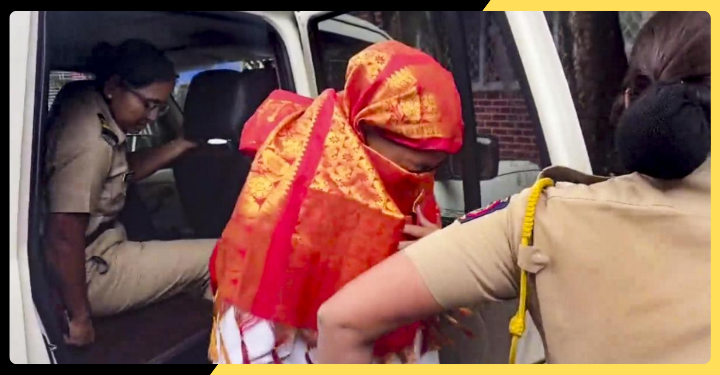
The investigation into the death of 26-year-old realtor Ketan Agarwal quickly evolved from what initially appeared to be an accidental fall into a complex criminal case involving allegations of conspiracy, betrayal, and premeditated murder. According to investigators, several pieces of evidence collected during the probe gradually shifted the direction of the case and led police to conclude that the incident at Lohagad Fort was not an accident but an alleged planned killing.
The investigation began immediately after Ketan’s body was recovered from the deep gorge at Lohagad Fort on June 18. At first, authorities examined the possibility that the young businessman had accidentally slipped while exploring the historic hill fort, which is known for its steep cliffs and challenging terrain. Such accidents have occurred at tourist destinations across the country, making the initial assumption appear reasonable.
However, as police interviewed those connected to the incident, investigators reportedly noticed inconsistencies in the statements provided. Officers began reconstructing the timeline of events leading up to Ketan’s death, examining every detail from the couple’s journey to the fort until the fatal fall.
One of the earliest breakthroughs reportedly came from analysing digital evidence. Police examined mobile phone records, call details, and electronic communications to determine the movements and interactions of those involved before and after the incident. Investigators also reviewed travel records and location data to understand whether the movements of the accused matched the version of events initially presented.
Police also questioned family members, friends, and acquaintances to build a clearer picture of the relationships between Ketan Agarwal, his fiancée Siya Goyal, and the co-accused, Chetan Chaudhary. During this process, investigators allegedly uncovered information suggesting that Siya and Chetan had maintained close contact before the incident. According to police, this became an important aspect of the investigation into the alleged conspiracy.
Another significant development came through witness statements collected from people present at or near Lohagad Fort on the day of the incident. Investigators compared these accounts with the physical evidence gathered from the scene. Although police have not publicly disclosed every detail, they have indicated that witness testimony played an important role in verifying the sequence of events.
To further strengthen their investigation, officers conducted a detailed crime scene reconstruction at Lohagad Fort. Using a dummy, investigators recreated the alleged movements of the victim and the accused. The reconstruction allowed police to study distances, visibility, body positioning, and the practical possibility of the alleged attack occurring in the manner described during questioning.
Police believe that the reconstruction supported their theory that the victim was standing near the cliff edge when the alleged assault took place. Investigators also examined the terrain to determine whether an accidental fall was consistent with the available evidence or whether external force may have been involved.
Throughout the investigation, forensic experts were called upon to examine physical evidence collected from the scene. Investigators analysed the victim’s injuries alongside other available forensic material to determine whether the findings aligned with an accidental fall or supported the prosecution’s developing theory.
Authorities have emphasised that their conclusions are based on the cumulative assessment of multiple forms of evidence rather than a single piece of information. Police have suggested that electronic records, witness testimony, forensic findings, and crime scene reconstruction together formed the basis for filing murder charges against the accused.
Despite the progress made by investigators, the legal process is still underway. The prosecution will be required to present all evidence before the court, while the defence will have the opportunity to challenge the investigation, question the credibility of witnesses, and dispute the prosecution’s interpretation of the facts. Until a court reaches a verdict, the allegations remain unproven.
The Pune fort murder investigation has attracted national attention because of the detailed investigative work involved in transforming what initially appeared to be a tragic accident into an alleged case of planned homicide. As the judicial proceedings move forward, the evidence collected during the investigation will play a crucial role in determining the outcome of one of Maharashtra’s most closely followed criminal cases.
Journalist Details

- Jitendra Kumar is an Indian journalist and social activist from Hathras in Uttar Pradesh is known as the senior journalist and founder of Xpert Times Network Private Limited.
Latest entries
 Crime NewsSeptember 4, 2026‘Targeted Because of Our Names’: Journalists’ Allegations Trigger Religious Discrimination Row
 NewsSeptember 1, 2026With Pakistan PM Present, Modi Calls for Complete Dismantling of Terror Ecosystem
 Crime NewsAugust 31, 2026From Gym Shooting to Police Encounter: The Timeline of the Ankit Balyan Murder Investigation
 Latest NewsAugust 27, 2026Ganga Barrage Tragedy: Instructor and Trainee Pilot Killed in Kanpur Crash