
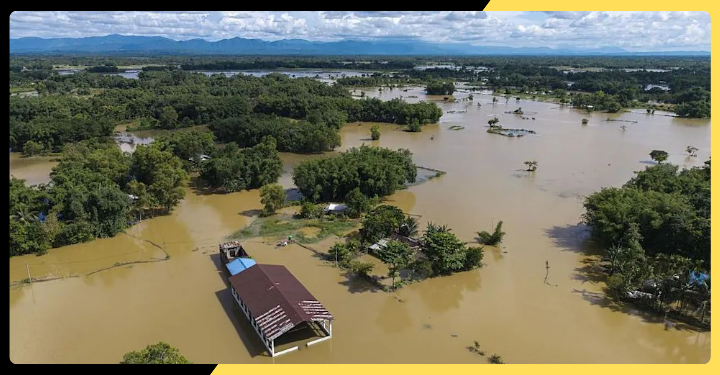
“It took everything from us.”
These heartbreaking words capture the reality faced by countless families across Assam after one of the state’s most destructive flood seasons in recent years. Homes have disappeared beneath muddy waters, crops have been washed away, and entire communities now face the enormous challenge of rebuilding their lives from almost nothing.
For many residents living along the banks of the Brahmaputra River, floods are an annual reality. However, this year’s disaster has been particularly severe due to relentless monsoon rainfall and rapidly rising river levels. Villages that had experienced flooding before found themselves overwhelmed by water reaching levels many had never witnessed.
Families describe frightening moments when floodwaters entered their homes late at night. Parents carried children on their shoulders while elderly relatives were helped onto rescue boats. Many escaped with only the clothes they were wearing, leaving behind furniture, household belongings, livestock, and important documents.
Relief camps have become temporary homes for thousands of displaced people. Schools, community halls, and government buildings have been converted into shelters where families sleep on mats and rely on donated food and drinking water. Although relief agencies continue to provide assistance, life inside these camps remains challenging due to overcrowding and limited privacy.
Women and children face particular difficulties during displacement. Access to sanitation facilities, healthcare, and nutrition remains a constant concern. Pregnant women require specialised medical attention, while young children are vulnerable to infections and malnutrition. Healthcare workers and volunteers are making regular visits to ensure essential services continue despite difficult conditions.
Farmers have suffered devastating financial losses. Floodwaters have destroyed standing crops across large areas, leaving families without their primary source of income. Many agricultural workers fear they may fall into debt as they attempt to recover from the disaster. Government compensation programmes are expected to provide some relief, but rebuilding livelihoods will require long-term support.
Small businesses have also experienced heavy losses. Local shops, roadside vendors, and small enterprises have seen inventories destroyed and customer demand disappear as communities focus on survival. Reopening businesses will depend on restoring transportation, electricity, and local markets.
Children have seen their education interrupted as schools remain flooded or function as relief centres. Books, uniforms, and school supplies have been lost in many homes. Teachers are working with local authorities to minimise learning disruptions, but many students may require additional support once schools reopen.
Mental health is becoming an increasingly important issue following the disaster. Losing homes, possessions, and financial security has left many families emotionally traumatised. Counsellors and community volunteers are encouraging affected residents to seek emotional support while rebuilding their lives.
The floods have also caused significant environmental damage. Riverbank erosion continues to threaten villages, forcing some communities to relocate permanently. Wildlife habitats have been submerged, while domestic animals struggle to find shelter and food.
Rescue personnel from multiple agencies continue working in flood-affected districts, delivering relief materials and evacuating people from isolated areas. Helicopters, boats, and specialised rescue equipment have been deployed where roads remain inaccessible. Their efforts have saved thousands of lives despite difficult weather conditions.
Experts believe climate change is increasing the frequency and intensity of extreme rainfall events across South Asia. Combined with rapid urbanisation, deforestation, and changing river systems, these factors are making flood management increasingly complex. They stress that long-term solutions must include stronger embankments, improved forecasting systems, better land-use planning, and greater investment in disaster preparedness.
Even amid overwhelming hardship, Assam’s communities continue to demonstrate remarkable resilience. Neighbours are helping one another rebuild damaged homes, volunteers are distributing relief supplies, and charitable organisations are raising funds for recovery efforts.
For many survivors, however, rebuilding is about far more than replacing physical possessions. It is about restoring dignity, security, and hope for the future. While the scars of this disaster may remain for years, the determination shown by Assam’s people serves as a powerful reminder that even after losing everything, communities can come together to begin again.
Journalist Details

- Jitendra Kumar is an Indian journalist and social activist from Hathras in Uttar Pradesh is known as the senior journalist and founder of Xpert Times Network Private Limited.
Latest entries
 NewsAugust 18, 2026SAVE America Act: Trump Turns India’s Voter ID Model Into a Political Argument
 NewsAugust 17, 2026Shehzad Poonawalla’s Second Resignation From BJP: What Happened and What Comes Next
 Latest NewsAugust 16, 2026August 20 Jharkhand Protest: What Students Want From the Hemant Soren Government
 World NewsAugust 15, 202620 Dead Initially, Toll Rises to 38 After Powerful Indonesia Quake; Rescue Teams Search Rubble