
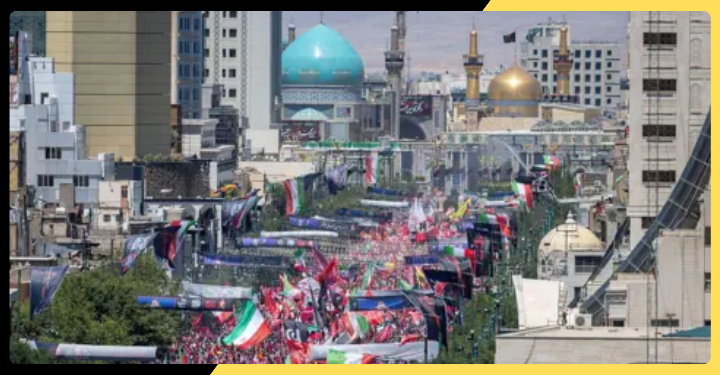
Mashhad, Iran: A sea of mourners flooded the streets of Mashhad as Iran brought the funeral ceremonies of its late Supreme Leader, Ayatollah Ali Khamenei, to a close with a burial at the revered Imam Reza Shrine. The emotional event drew hundreds of thousands of people from across the country, making it one of the largest public gatherings in Iran’s recent history. Citizens, religious scholars, military officials, and political leaders came together to pay their final respects to the man who led the Islamic Republic for more than three decades.
Long before sunrise, roads leading to Mashhad were crowded with buses, private vehicles, and organized convoys transporting mourners from every corner of the country. Many attendees had traveled for several hours, while others spent days on the road to witness the historic ceremony. The city was transformed into a center of national mourning as black flags, religious banners, and portraits of the late leader lined major streets and public squares.
The funeral procession began with prayers led by senior clerics before the coffin was carried through carefully planned routes toward the Imam Reza Shrine. Thousands of volunteers assisted security personnel in guiding the massive crowd, distributing drinking water, and helping elderly visitors navigate the packed streets. Medical teams remained on standby throughout the day to provide emergency assistance in the summer heat.
Authorities imposed strict security measures across Mashhad to ensure the ceremony proceeded without disruption. Police officers, members of the Islamic Revolutionary Guard Corps, and emergency responders were stationed throughout the city. Drone surveillance and helicopters monitored crowd movement from the air while checkpoints controlled access to the shrine and surrounding areas.
State television devoted continuous live coverage to the funeral, broadcasting scenes of mourners offering prayers, reciting verses from the Quran, and chanting religious slogans. Many participants held flowers, while others carried Iranian flags as they silently watched the procession move toward the burial site. The atmosphere combined deep sorrow with strong expressions of national solidarity.
Government leaders attending the ceremony described Ayatollah Khamenei as a central figure in Iran’s modern history. Officials praised his leadership during periods of political uncertainty, economic sanctions, and regional conflict. Speeches delivered throughout the funeral emphasized unity, resilience, and the importance of preserving the principles of the Islamic Republic during a period of leadership transition.
Foreign delegations from several countries also attended memorial events, reflecting Iran’s diplomatic relationships with regional allies. Messages of condolence from governments and political organizations around the world were read during official ceremonies, while religious leaders from different communities expressed sympathy to the Iranian people.
The Imam Reza Shrine, one of the holiest sites in Shiite Islam, provided a symbolic setting for the burial. Many mourners described the location as deeply meaningful because Mashhad is both a major religious destination and the birthplace of the late Supreme Leader. Pilgrims offered prayers inside and around the shrine throughout the day, creating an atmosphere of reflection and devotion.
Despite the emotional nature of the event, authorities reported that the ceremony remained largely peaceful and well organized. Public transportation operated on extended schedules, while volunteers provided food, water, and temporary shelter to visitors arriving from distant provinces. Local businesses and government offices remained closed as residents participated in the national day of mourning.
Political analysts believe the funeral marks the end of a defining chapter in Iran’s contemporary history. Attention is now shifting toward the country’s future leadership and the challenges that lie ahead, including economic recovery, international diplomacy, and regional security. The orderly conduct of the funeral has been viewed by many observers as an effort to demonstrate stability during a significant political transition.
As evening prayers concluded inside the Imam Reza Shrine, the burial ceremony officially came to an end. The crowds slowly dispersed from Mashhad’s streets, leaving behind a city that had served as the focal point of one of the most significant funeral ceremonies in Iran’s modern history. For millions of Iranians, the day represented not only the farewell to a long-serving leader but also the beginning of a new chapter for the nation.
Journalist Details

- Jitendra Kumar is an Indian journalist and social activist from Hathras in Uttar Pradesh is known as the senior journalist and founder of Xpert Times Network Private Limited.
Latest entries
 Crime NewsOctober 13, 2026Hyderabad Police Investigate Suspicious Death of 29-Year-Old Software Engineer
 World NewsOctober 11, 2026Hydropower Project and Bridges Damaged as Nepal Floodwaters Surge
 Latest NewsOctober 10, 2026Delhi on High Alert as CJP Protest Draws Attention to Electoral Roll Revision Controversy
 Latest NewsOctober 8, 2026Fresh FIRs Against Rahul and Priyanka Gandhi Add Fuel to Escalating SIR Protests