
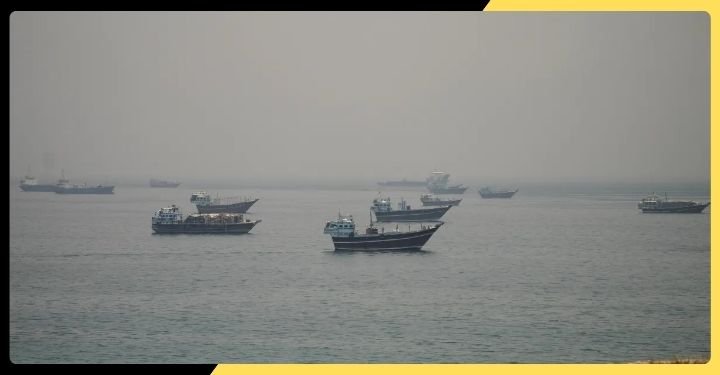
India’s rise as a major global economic and strategic power has brought with it a complex set of responsibilities. Among them is the need to protect millions of citizens working abroad, including thousands of seafarers who form the backbone of international shipping operations. When tensions escalate between the United States and Iran, India finds itself facing a difficult strategic dilemma: how to safeguard its maritime workforce while maintaining critical relationships with both sides.
The challenge is particularly evident in the Strait of Hormuz, one of the world’s most important shipping corridors. This narrow waterway handles a substantial portion of global oil exports and supports extensive commercial shipping activity. Any instability in the region directly affects global trade, energy markets, and maritime security.
For India, the stakes are exceptionally high. The country depends heavily on energy imports from the Gulf region. At the same time, it enjoys strong strategic, economic, and defense ties with the United States. Balancing these interests requires careful diplomacy, especially when relations between Washington and Tehran become strained.
Indian seafarers are often caught in the middle of this geopolitical equation. They serve aboard vessels operating throughout the Gulf and beyond, transporting essential cargo across international waters. Their work supports global commerce and contributes significantly to India’s economy through employment and remittances.
However, when military tensions rise, merchant vessels face increased risks. Security alerts become more frequent, insurance costs rise, and shipping companies must adjust routes and procedures. Most importantly, crews are exposed to potential dangers ranging from military confrontations to accidental involvement in security incidents.
The vulnerability of seafarers highlights the broader challenges of globalization. Modern economies depend on interconnected supply chains and international labor markets. Yet the workers who sustain these systems often have limited protection against geopolitical disruptions.
India has demonstrated its ability to respond effectively to overseas crises in the past. Large-scale evacuation operations and diplomatic interventions have showcased the government’s commitment to protecting citizens abroad. Nevertheless, maritime workers present a unique challenge because they operate across vast international waters rather than within specific national territories.
To address this issue, India must pursue a multi-layered strategy. Diplomatic engagement remains essential. Maintaining open communication with all relevant stakeholders can help ensure that the safety of civilian mariners remains part of broader security discussions.
India can also strengthen cooperation with international maritime organizations and partner nations to improve information sharing and emergency response capabilities. Enhanced coordination can help identify emerging threats and provide timely support to vessels operating in high-risk areas.
The shipping industry itself has an important role to play. Employers should invest in advanced security training, robust communication systems, and comprehensive welfare programs. Seafarers deserve access to the resources necessary to navigate increasingly complex security environments.
Public awareness is equally important. While geopolitical developments often dominate headlines, the experiences of maritime workers rarely receive comparable attention. Greater recognition of their contribution can help generate support for policies that prioritize their safety and well-being.
The US-Iran relationship will likely remain a source of uncertainty for the foreseeable future. Periods of calm may alternate with renewed tensions, creating ongoing challenges for regional stability. In this environment, India must continue balancing strategic interests while protecting its citizens.
Ultimately, the safety of Indian seafarers should not be viewed as a secondary concern. These professionals are essential participants in global trade and national development. Their welfare deserves a central place in policy discussions surrounding maritime security and international diplomacy.
India’s strategic dilemma is real, but it is not insurmountable. Through careful diplomacy, international cooperation, and sustained commitment to maritime safety, the country can help ensure that its seafarers receive the protection they deserve while preserving vital international relationships.
Journalist Details

- Jitendra Kumar is an Indian journalist and social activist from Hathras in Uttar Pradesh is known as the senior journalist and founder of Xpert Times Network Private Limited.
Latest entries
 NewsOctober 14, 2026Delhi SIR Raises Questions Over Equal Voting Rights for Minority Communities
 Crime NewsOctober 13, 2026Hyderabad Police Investigate Suspicious Death of 29-Year-Old Software Engineer
 World NewsOctober 11, 2026Hydropower Project and Bridges Damaged as Nepal Floodwaters Surge
 Latest NewsOctober 10, 2026Delhi on High Alert as CJP Protest Draws Attention to Electoral Roll Revision Controversy