
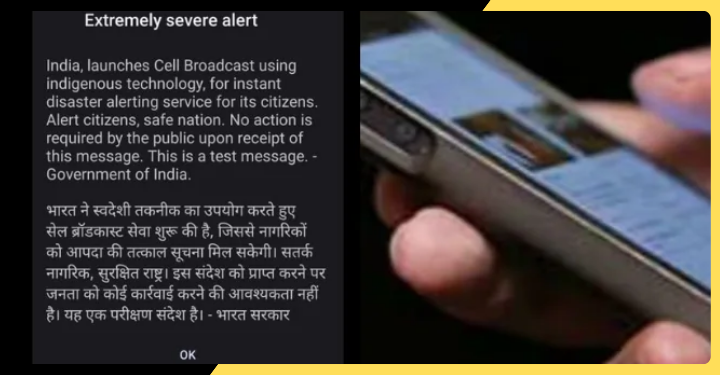
Mobile phone users across several Indian states experienced sudden emergency alarms as the Centre carried out a nationwide test of the National Disaster Alert Network. The large-scale exercise was designed to evaluate the country’s preparedness for communicating with citizens during disasters and emergency situations.
The warning notifications were transmitted using cell broadcast technology, enabling authorities to send alerts instantly to millions of devices connected to mobile towers. The messages informed users that the notification was only part of a routine government test and did not signal any real threat.
Officials from the Department of Telecommunications and the National Disaster Management Authority said the exercise aimed to strengthen India’s emergency communication infrastructure amid increasing climate-related risks. Floods, cyclones, heatwaves, earthquakes, and landslides continue to affect various parts of the country each year, making early warning systems increasingly important.
The alerts reached users through telecom networks operated by Jio, Airtel, Vodafone Idea, and BSNL. Technical teams observed how efficiently the messages were delivered and monitored network performance throughout the exercise.
Many citizens were caught off guard by the sudden beeping sounds from their phones. Social media quickly filled with reactions ranging from curiosity to concern, with some users initially believing the alerts were related to a cybersecurity issue or national emergency.
Experts explained that the Cell Broadcast Alert System is more reliable than traditional SMS-based communication during emergencies. Since the messages are broadcast directly through telecom infrastructure, they can reach a large number of users instantly without overloading the network.
Government officials stated that the system can eventually support region-specific alerts, allowing authorities to send targeted warnings only to affected districts or states. The alerts may also include evacuation instructions, weather advisories, shelter information, and safety guidelines in multiple languages.
Disaster management professionals praised the initiative, noting that timely warnings have historically reduced casualties during severe weather events. India’s disaster response agencies have increasingly focused on technological solutions to improve preparedness and coordination during emergencies.
Some citizens, however, questioned whether enough public awareness campaigns had been conducted before the exercise. Experts agreed that educating the public about emergency alerts is necessary to prevent panic and ensure people respond appropriately during actual crises.
Officials clarified that the nationwide alert test was pre-planned and unrelated to any ongoing threat. They urged citizens not to ignore such notifications in the future, emphasizing that emergency alerts could provide critical life-saving information during real disasters.
The government is expected to conduct further testing and technical upgrades before implementing the system on a permanent nationwide basis. Authorities believe the initiative represents a major step toward building a more resilient and disaster-ready India in the years ahead.
Journalist Details

Latest entries
 Latest NewsOctober 12, 2026Rahul Gandhi and Mallikarjun Kharge Face Setback Ahead of Planned Supreme Court March
 World NewsOctober 5, 2026Brazil Vote Tightens as Bolsonaro Falls Short of Decisive Victory
 Latest NewsOctober 1, 2026Two Lethal Injections Fail to Kill Tennessee Death Row Inmate Christa Pike
 Latest NewsSeptember 26, 2026Election Commission Says Differing Opinions Are Normal, Final Decisions Unanimous