

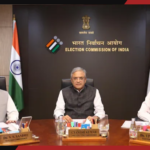
The Election Commission of India (EC) is set to engage in talks with senior government officials next week regarding the proposed linkage of the Aadhaar number with the Electoral Photo Identity Card (EPIC). This discussion is expected to address several key issues surrounding the controversial proposal, which aims to improve the accuracy and integrity of voter registration.
Context of the Proposal:
The idea of linking Aadhaar with voter IDs was initially proposed as a solution to eliminate problems like voter impersonation and duplication in the voter rolls. By connecting Aadhaar to EPICs, the Election Commission believes it can ensure that only legitimate, eligible voters participate in elections and that fraudulent voting practices are minimized.
Aadhaar is a unique 12-digit identification number that links individuals’ biometric data (such as fingerprints and iris scans) with personal details. Introduced as a way to simplify and streamline government services, Aadhaar has already been used for a variety of purposes, including accessing government welfare benefits, banking services, and mobile phone registrations.
EPICs, or voter identification cards, are issued by the Election Commission to Indian citizens who are registered to vote. They are used as the primary means of verifying voter identity at polling stations during elections.
Reasons for the Linkage:
The Election Commission has outlined several key reasons for pursuing the Aadhaar-EPIC linkage:
- Preventing Voter Fraud: One of the most significant benefits of linking Aadhaar to voter IDs is the potential to curb voter fraud. Instances of multiple voting, voter impersonation, and duplicate voter entries in electoral rolls are some of the challenges faced in past elections. The linkage could help eliminate these issues by allowing for more accurate verification of voter identities.
- Cleaner Voter Rolls: Duplicate entries in the electoral rolls are another problem that the Election Commission is keen to address. By linking Aadhaar numbers to voter IDs, it would become easier to identify and remove individuals who are registered multiple times under different names or addresses.
- Improved Electoral Integrity: The Election Commission believes that the Aadhaar-EPIC linkage will improve the overall credibility of elections in India. With accurate voter lists, the chances of election-related fraud would be reduced, potentially restoring public confidence in the electoral process.
Concerns Surrounding the Linkage:
Despite the proposed benefits, the idea of linking Aadhaar with voter IDs has sparked significant opposition from various groups, including political parties, civil rights organizations, and privacy advocates.
- Privacy Concerns: A major concern raised by critics is the potential violation of citizens’ privacy. Linking Aadhaar to voter IDs would result in the creation of a vast database containing both biometric and demographic information. This raises fears about the misuse of personal data, unauthorized access, and the risk of data breaches. Opponents argue that such a centralized database could lead to surveillance and the erosion of citizens’ privacy rights.
- Exclusion of Vulnerable Groups: Another significant concern is that the Aadhaar-EPIC linkage may exclude individuals who do not possess Aadhaar numbers or face difficulties in linking their Aadhaar with their voter IDs. People in rural areas, the elderly, and economically disadvantaged groups may not have access to Aadhaar or the technology required to link it with their voter IDs. This could result in a significant number of legitimate voters being disenfranchised.
- Legal and Constitutional Issues: There are also legal questions regarding the Aadhaar-EPIC linkage. The Supreme Court of India has previously ruled that Aadhaar cannot be made mandatory for certain services. Privacy advocates argue that forcing citizens to link their Aadhaar to their voter ID could violate the constitutional right to privacy. Legal experts are concerned that such a move might set a troubling precedent for the use of Aadhaar data beyond its original purpose.
The Scheduled Talks:
To address these concerns and move forward with the proposal, the Election Commission has scheduled a meeting with senior government officials next week. This meeting will focus on finding solutions that balance the need for secure and accurate voter registration with the protection of citizens’ rights.
Key issues likely to be discussed during these talks include:
- Data Security and Privacy Protections: One of the main points of focus will be how to ensure the security of voter data and protect individuals’ privacy. Measures such as encryption, strict access controls, and transparent data handling protocols will likely be on the table to safeguard against misuse of sensitive information.
- Inclusivity for Vulnerable Groups: Ensuring that no voter is excluded from the electoral process due to difficulties with Aadhaar linkage will be another major topic of discussion. The government may propose measures to facilitate Aadhaar linking for individuals in remote areas or those who lack digital literacy, ensuring equal access to voting rights for all citizens.
- Legal Challenges and Constitutional Framework: The legal implications of linking Aadhaar to voter IDs will need to be addressed. Experts will likely evaluate whether such a move is in line with existing laws, including the right to privacy, as well as the constitutional right to vote. Any decision made by the government will have to consider the judicial framework to avoid potential legal challenges.
- Public and Political Consensus: The government and the Election Commission will also need to consider the broader public sentiment on this issue. While some political parties support the Aadhaar-EPIC linkage as a way to modernize and secure the electoral process, others argue that it will disenfranchise vulnerable voters. Achieving consensus on this contentious issue may be difficult, but it is crucial to ensure that all political stakeholders are on board.
- Practical Implementation: The logistics of implementing Aadhaar-EPIC linking on such a massive scale will also be a significant part of the discussions. The government will need to determine the feasibility of executing this initiative across India’s vast and diverse population, considering the challenges posed by infrastructure, technology, and resources.
Possible Outcomes:
The outcome of these talks will have significant implications for the future of India’s electoral system. If the discussions result in the implementation of Aadhaar-EPIC linkage, it could lead to a more secure and transparent electoral process. However, the implementation will require careful attention to issues of inclusivity, security, and privacy.
Alternatively, the talks may lead to the postponement or modification of the plan, particularly if concerns about data security or voter exclusion are deemed too problematic to resolve at this time. In such a case, the status quo would remain, and the Election Commission would continue to focus on other measures to improve the electoral process.
Conclusion:
The upcoming talks between the Election Commission and senior government officials will play a critical role in shaping the future of voter registration and election security in India. While the Aadhaar-EPIC linkage has the potential to improve the integrity of the electoral process, it also raises significant concerns that must be carefully addressed. Ensuring that the rights of citizens are upheld while tackling issues like voter fraud and multiple registrations will require a delicate balance. The decisions made during these discussions will be vital in determining how India’s elections are conducted in the years to come.
Journalist Details

Latest entries
 Latest NewsSeptember 26, 2026Election Commission Says Differing Opinions Are Normal, Final Decisions Unanimous
 Crime NewsSeptember 22, 2026Kalkaji Temple Visit Turns Into Alleged Sexual Assault Case in Nearby Park
 NewsSeptember 20, 2026BMW Flies Off Coastal Road Bridge in Mumbai, CCTV Shows Fatal Crash
 Latest NewsSeptember 17, 2026Disha Salian Case Returns to Spotlight After Rs 500 Crore Legal Demand