
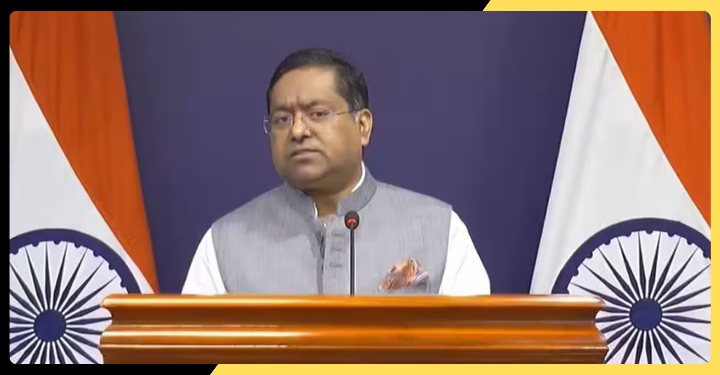
India’s Ministry of External Affairs (MEA) has demonstrated how diplomacy is evolving in the digital age by using internet meme culture to communicate a serious geopolitical message. In a move that blended humour with official policy, the Ministry shared a meme reinforcing India’s position that Jammu & Kashmir (J&K) and Ladakh are integral and inseparable parts of the country. The post quickly gained traction online, highlighting the growing role of social media in shaping public diplomacy and national narratives.
Traditionally, foreign ministries have relied on press releases, official statements, diplomatic notes, and international meetings to communicate their positions. However, the rapid expansion of digital platforms has transformed the way governments interact with citizens and global audiences. The MEA’s latest social media campaign reflects this changing landscape, where concise, visual, and easily shareable content often reaches far more people than conventional diplomatic communication.
The meme, although light-hearted in style, conveyed a firm message about India’s sovereignty over Jammu & Kashmir and Ladakh. It reiterated the government’s long-standing position that these regions are an integral part of India and that any contrary depiction or narrative does not reflect India’s official stance. The creative format helped the message spread quickly across social media, sparking conversations among users, journalists, diplomats, and policy observers.
India has consistently maintained its position on Jammu & Kashmir and Ladakh in both domestic and international forums. Following the constitutional changes introduced in August 2019, which resulted in the reorganisation of the erstwhile state of Jammu & Kashmir into the Union Territories of Jammu & Kashmir and Ladakh, the government has repeatedly stated that the decision was an internal matter. Since then, Indian officials have continued to reaffirm that the country’s territorial integrity remains non-negotiable.
The rise of social media has fundamentally changed the nature of diplomacy. Governments no longer communicate solely with other governments; they also address millions of citizens, journalists, researchers, and international observers in real time. Platforms such as X, Instagram, Facebook, and YouTube have become important channels for sharing official information, correcting misinformation, and explaining policy decisions.
The MEA’s use of meme culture is part of this broader evolution. Memes have become one of the internet’s most influential forms of communication because they simplify complex subjects into visually engaging and easily understandable messages. Their ability to spread rapidly makes them particularly useful for public awareness campaigns and strategic communication.
Experts in digital communication say the effectiveness of memes lies in their accessibility. A carefully designed meme can convey an official message in a matter of seconds while encouraging users to share it with their own networks. This organic distribution significantly expands the reach of government communication, particularly among younger audiences who consume news primarily through social media.
The Ministry’s approach also demonstrates an effort to counter misinformation more proactively. False claims, manipulated maps, and misleading narratives regarding international borders frequently circulate online. Such content can spread rapidly before official clarifications reach the public. By using the same digital tools that often drive online conversations, governments can respond more effectively and ensure that their official position receives wider visibility.
Communication specialists believe that digital diplomacy has become an essential complement to traditional foreign policy. While negotiations, bilateral meetings, and international agreements remain central to diplomacy, online engagement now plays a vital role in shaping public perception. Governments increasingly recognise that narratives formed on digital platforms can influence discussions far beyond national borders.
India has steadily strengthened its digital outreach over the past decade. The Ministry of External Affairs regularly posts updates on diplomatic visits, international summits, humanitarian assistance, emergency evacuation operations, passport services, and cultural initiatives. The latest meme illustrates that official institutions are also willing to adopt contemporary communication styles when appropriate, without compromising the seriousness of their message.
Public response to the meme was significant. Many social media users praised the Ministry for presenting a complex geopolitical issue in a format that was easy to understand and widely shareable. Supporters described the initiative as an example of confident and modern governance that reflects changing patterns of communication. Others viewed it as a creative extension of India’s broader public diplomacy strategy.
Analysts note that governments worldwide are increasingly embracing informal communication styles to connect with digital audiences. Several foreign ministries and international organisations have experimented with humour, short videos, infographics, and interactive posts to explain policies or respond to current events. India’s latest campaign places the MEA among those institutions adapting to the realities of the modern information environment.
However, experts also stress that creative communication must remain responsible. Diplomatic messaging carries significant weight, and every official post is carefully examined by domestic and international audiences. Humour should support policy clarity rather than create confusion or invite misinterpretation. In the MEA’s case, the meme maintained a balance between engaging presentation and a clear reaffirmation of India’s official position.
The growing importance of digital diplomacy also reflects broader technological changes. Artificial intelligence, data analytics, and real-time social media monitoring now help governments understand how information spreads and how public opinion evolves. This enables ministries to respond more quickly to misinformation, clarify official positions, and engage with audiences in ways that were not possible through traditional diplomatic channels alone.
As international communication continues to evolve, digital platforms are expected to play an even greater role in diplomacy. Governments that combine credibility with innovation are likely to strengthen their ability to communicate effectively in a fast-moving information ecosystem.
The Ministry of External Affairs’ decision to use meme culture is therefore more than a creative social media experiment. It represents a strategic adaptation to modern communication trends while reinforcing India’s established position on Jammu & Kashmir and Ladakh. By blending official diplomacy with contemporary digital engagement, the MEA has shown that even serious geopolitical issues can be communicated effectively through the language of today’s online world.
Journalist Details

- Jitendra Kumar is an Indian journalist and social activist from Hathras in Uttar Pradesh is known as the senior journalist and founder of Xpert Times Network Private Limited.
Latest entries
 World NewsOctober 11, 2026Hydropower Project and Bridges Damaged as Nepal Floodwaters Surge
 Latest NewsOctober 10, 2026Delhi on High Alert as CJP Protest Draws Attention to Electoral Roll Revision Controversy
 Latest NewsOctober 8, 2026Fresh FIRs Against Rahul and Priyanka Gandhi Add Fuel to Escalating SIR Protests
 NewsOctober 7, 2026Rahul Gandhi, Priyanka Gandhi Among Opposition Leaders Detained After Delhi Protest