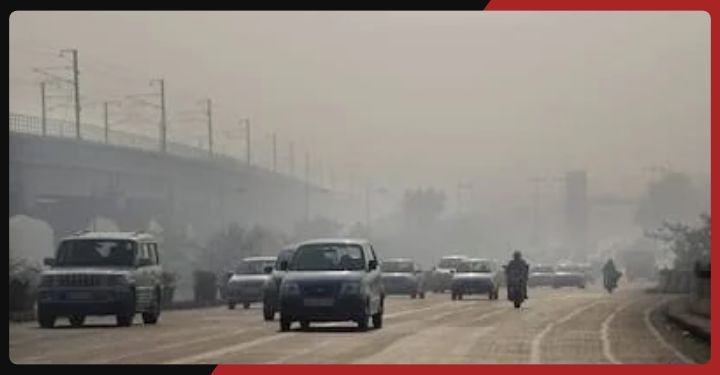
Delhi’s familiar winter pollution problem has returned, raising concerns among residents as air quality deteriorates across the national capital. On November 2, the city’s Air Quality Index entered the very poor category, prompting authorities to activate Stage II of the Graded Response Action Plan across Delhi-NCR.
The average AQI reached 324 at 4 pm, according to reports citing Central Pollution Control Board data. This development marks the first very poor air-quality reading of the season and signals the beginning of another difficult period for residents.
Every year, the national capital experiences worsening air quality during the colder months. Lower wind speeds, changing temperatures, emissions from vehicles, road dust and other pollution sources combine to create conditions that allow pollutants to remain suspended in the atmosphere.
Why Does Delhi Experience Winter Pollution?
Delhi’s air pollution is caused by several overlapping factors. Vehicle emissions, industrial activities, construction dust, waste burning and emissions from neighbouring regions all contribute to the problem.
During winter, meteorological conditions can make the situation worse. When wind speeds are low, pollutants cannot disperse effectively. Temperature inversions can also prevent polluted air from rising and mixing with cleaner air above.
As a result, pollution accumulates near the surface, exposing millions of people to unhealthy air.
The latest AQI increase comes after a temporary improvement following rainfall in October. The city’s AQI reportedly dropped to around 60 on October 30, but the improvement was followed by a rapid rise over the next three days.
GRAP-II Introduced to Control Pollution
The CAQM has responded by imposing Stage II of GRAP across Delhi-NCR. The restrictions are intended to strengthen the measures already introduced under the first stage.
Under the revised action plan, Stage II applies when Delhi’s AQI enters the 301-400 range.
Authorities have been instructed to conduct regular mechanical sweeping of roads, sprinkle water and dust suppressants, and deploy anti-smog guns at major roads and identified hotspots.
Municipal departments are also expected to improve garbage collection and ensure that construction waste is transported and disposed of properly.
Open burning of waste and biomass is prohibited under the pollution-control measures.
Monitoring Pollution Hotspots
Several locations in Delhi have recorded worrying pollution levels. Reports from monitoring stations show that RK Puram, ITO, Dwarka, Sirifort, Chandni Chowk and other areas have experienced very poor air quality.
Jahangirpuri recorded an AQI of 417 in Monday’s monitoring data, entering the severe category.
Such variations demonstrate that pollution exposure can differ significantly between neighbourhoods. Residents living close to major roads, industrial areas and construction sites may face additional exposure.
Government’s Winter Action Plan Faces Its First Major Test
The Delhi government’s winter action measures came into force from November 1. These include restrictions concerning vehicle entry, construction-related dust, parking charges and office attendance.
Authorities have also begun enforcement operations against vehicles that fail to meet applicable emission and pollution-certificate requirements.
The GRAP-II decision now adds another layer of pollution-control measures, placing additional responsibility on municipal bodies, traffic police and environmental departments.
What Lies Ahead?
The immediate challenge is to prevent pollution from reaching the severe category across a wider area.
Residents have been advised to limit unnecessary outdoor activities and follow health-related precautions. People with existing respiratory conditions should pay particular attention to official air-quality advisories.
Delhi’s pollution crisis is not a problem that can be solved through a single government order. It requires continuous monitoring, cooperation between neighbouring states and effective implementation of long-term environmental policies.
The coming days will be important in determining whether the new restrictions can stabilise the city’s deteriorating air quality.
Journalist Details


Latest entries