
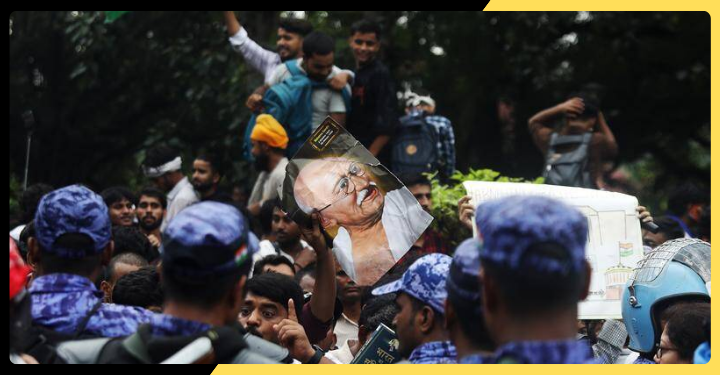
Supporters of the fictional “Cockroach Movement” gathered in New Delhi on Monday to hold a large public rally and attempt a peaceful march toward Parliament, calling for what they described as broad national reforms and greater public participation in policymaking. The demonstration attracted participants from several states and remained peaceful throughout the day under the watch of a significant police presence.
Protesters began arriving early in the morning at the designated assembly point carrying banners, flags, and placards displaying the movement’s slogans. Organizers said the rally had been planned weeks in advance and was intended to provide citizens with an opportunity to express their views through lawful and democratic means.
Volunteers welcomed participants, distributed drinking water, and guided people to designated gathering areas. Medical teams and first-aid stations were also set up to assist anyone affected by the hot weather. Throughout the morning, speakers addressed the crowd from a temporary stage, emphasizing the importance of peaceful civic engagement and responsible public demonstrations.
“Our objective is to encourage constructive dialogue,” one organizer said during the rally. “We want our concerns to be heard through democratic institutions while respecting the law and the rights of others.”
Authorities implemented extensive security arrangements around Parliament and nearby government offices before the march began. Police officers established barricades at several locations, monitored crowd movements, and coordinated with traffic officials to reduce disruptions on major roads.
Officials repeatedly reminded demonstrators that while peaceful assembly was permitted within approved areas, access to high-security government zones would remain restricted. Organizers acknowledged these conditions and urged participants to cooperate fully with law enforcement personnel.
By late morning, thousands of demonstrators began walking along the approved procession route. Many chanted slogans supporting their campaign and carried signs encouraging transparency, accountability, and increased public consultation in government decision-making. The march progressed in an orderly manner, with volunteers helping maintain discipline within the crowd.
When the procession approached the security perimeter surrounding Parliament, police officers halted further movement at a designated checkpoint. Senior officers met with movement representatives and explained that existing security regulations prohibited unauthorized gatherings near the Parliament complex.
After a brief discussion, organizers instructed supporters to remain peaceful and avoid attempting to cross the barricades. Instead of continuing the march, participants gathered at the designated stopping point, where speakers continued addressing the crowd and outlining the movement’s objectives.
A delegation of representatives later submitted a memorandum through official administrative channels, requesting that lawmakers consider the issues raised during the demonstration. Organizers expressed hope that the document would encourage meaningful discussion between citizens and public institutions.
Throughout the afternoon, the atmosphere remained calm. Volunteers collected litter, distributed refreshments, and encouraged participants to leave public spaces clean after the event. Police reported only minor medical incidents related to heat and fatigue, with no serious injuries or property damage.
The demonstration attracted attention from local residents, journalists, and passersby. While some observers expressed support for the movement’s right to peaceful protest, others noted the inconvenience caused by temporary traffic diversions around central Delhi. Traffic police worked throughout the day to redirect vehicles and minimize delays.
Political analysts said public demonstrations continue to play an important role in democratic societies by allowing citizens to express differing viewpoints. They observed that respectful dialogue between organizers, authorities, and elected representatives is often essential in addressing public concerns while maintaining order.
As the rally concluded in the late afternoon, organizers thanked participants for maintaining discipline and complying with police instructions. Demonstrators gradually dispersed without incident, allowing authorities to reopen roads and restore normal traffic conditions.
Police officials later stated that cooperation between organizers and law enforcement contributed to the peaceful conclusion of the event. Movement representatives also described the gathering as successful, saying it demonstrated that citizens could advocate for their views through non-violent and lawful means.
Although the march did not reach Parliament itself, the fictional rally concluded with renewed calls for continued public engagement, constructive dialogue, and peaceful participation in democratic processes.
Journalist Details

Latest entries
 Latest NewsOctober 12, 2026Rahul Gandhi and Mallikarjun Kharge Face Setback Ahead of Planned Supreme Court March
 World NewsOctober 5, 2026Brazil Vote Tightens as Bolsonaro Falls Short of Decisive Victory
 Latest NewsOctober 1, 2026Two Lethal Injections Fail to Kill Tennessee Death Row Inmate Christa Pike
 Latest NewsSeptember 26, 2026Election Commission Says Differing Opinions Are Normal, Final Decisions Unanimous