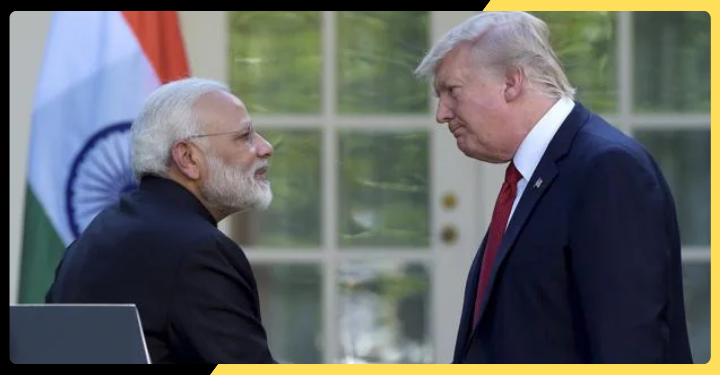
Trust and trade are expected to be at the center of discussions as Indian Prime Minister Narendra Modi prepares for a high-profile meeting with former U.S. President Donald Trump. The anticipated talks come at a significant moment for India-U.S. relations, with both nations seeking to strengthen economic cooperation while addressing concerns that have emerged in recent years regarding policy consistency, market access, and strategic alignment.
The India-United States partnership has evolved dramatically over the past two decades. Once characterized by limited engagement, the relationship has transformed into a broad strategic partnership covering defense, technology, energy, education, and commerce. Today, both countries view each other as important partners in shaping regional and global developments. Despite this progress, challenges remain, particularly in the areas of trade and mutual confidence.
Prime Minister Modi’s recent emphasis on a trust deficit highlights the importance of maintaining reliable and predictable partnerships in an increasingly uncertain world. Trust serves as the foundation for successful diplomatic and economic cooperation. Without confidence in each other’s commitments and intentions, even strong partnerships can face obstacles that limit their effectiveness.
Trade issues are expected to feature prominently during the discussions. India and the United States are among each other’s largest trading partners, with bilateral commerce spanning a wide range of industries including technology, pharmaceuticals, manufacturing, agriculture, and services. The economic relationship has generated substantial benefits for businesses and consumers in both countries.
However, trade disagreements have occasionally created friction. Concerns over tariffs, import duties, intellectual property rights, and market access have been recurring topics in bilateral negotiations. American businesses have often sought greater access to India’s vast consumer market, while Indian companies have advocated for fair treatment and fewer restrictions in the United States. Resolving these issues could help unlock new opportunities for growth and investment.
Another key area of discussion is likely to be supply chain resilience. Global disruptions in recent years have demonstrated the importance of diversified and dependable supply chains. India has emerged as an attractive destination for companies seeking alternatives to concentrated manufacturing hubs. Increased cooperation between India and the United States in this area could enhance economic security while creating jobs and investment opportunities.
Technology cooperation represents another major pillar of the relationship. Both countries recognize the strategic importance of emerging technologies, including artificial intelligence, semiconductor production, quantum computing, and cybersecurity. Collaboration in these sectors has the potential to drive innovation while strengthening national security capabilities. Trust will be particularly important in ensuring successful partnerships involving sensitive technologies and critical infrastructure.
Defense cooperation is also expected to remain high on the agenda. India and the United States have significantly expanded military collaboration through joint exercises, defense agreements, and intelligence-sharing arrangements. Both nations share concerns about maintaining stability and security in the Indo-Pacific region, making defense ties an increasingly important component of the broader relationship.
Despite these areas of cooperation, analysts note that differences in foreign policy approaches can sometimes create uncertainty. India’s commitment to strategic autonomy allows it to maintain relationships with a variety of global powers while pursuing its own national interests. This independent approach occasionally differs from Washington’s expectations, contributing to perceptions of a trust gap between the two partners.
The role of business leaders and investors will also be closely watched. Companies in both countries are eager for signals that policymakers are committed to creating a stable and predictable economic environment. Positive outcomes from the meeting could encourage greater cross-border investment and support long-term economic expansion.
Beyond economics and security, the relationship benefits from strong people-to-people connections. The Indian diaspora in the United States continues to play a significant role in fostering cultural understanding, educational exchanges, and business partnerships. These human connections provide an enduring foundation that strengthens bilateral ties even during periods of policy disagreement.
As Modi and Trump prepare for their discussions, expectations are high that both leaders will seek practical solutions to ongoing challenges while reinforcing shared interests. The ability to address trust concerns and advance trade cooperation could significantly influence the future trajectory of India-U.S. relations.
Ultimately, the meeting offers an opportunity to reaffirm the value of collaboration between two of the world’s largest democracies. By focusing on trust, trade, and strategic cooperation, both sides can work toward a stronger partnership capable of addressing the complex challenges of the modern global landscape.
Journalist Details


- Jitendra Kumar is an Indian journalist and social activist from Hathras in Uttar Pradesh is known as the senior journalist and founder of Xpert Times Network Private Limited.
Latest entries