
[ad_1]
Sharmita Kar | Edited by Aniruddha Dhar, New Delhi
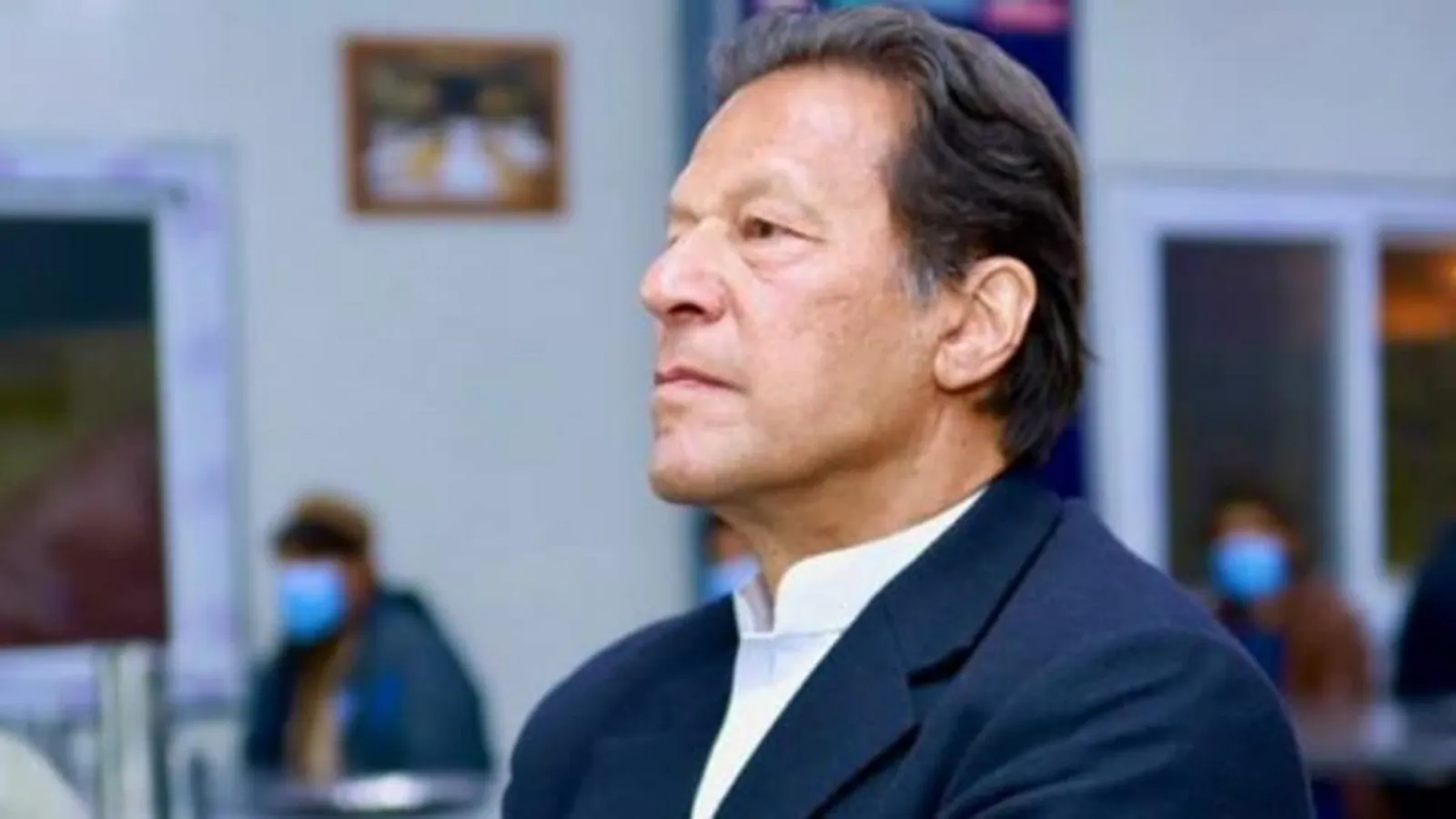
From becoming the greatest (arguably) cricketer to have braced Pakistan and winning the World Cup to launching his own political party and then going on to become the country’s prime minister, the boy from Lahore with a Midas-like touch, caught on a sticky wicket, has now been ousted as the Prime Minister of Pakistan through a historic no-confidence motion passed in a midnight session of the National Assembly.
The cricketer-turned-politician had been in the eye of political wrath that put his prime ministerial seat at risk. The former cricket star, embattled by a sinking economy, faced a series of resignations from his allies and cabinet members, and lost the majority in the Pakistan National Assembly, braving a no-confidence motion tabled by opposition parties in Parliament.
He is the first prime minister of Pakistan to lose office through a vote of no confidence.
Here’s are 10 things to know about Imran Khan:
- Imran Khan was a famed international cricketer and the captain of the Pakistan national cricket team before entering politics.
- Khan founded the Pakistan Tehreek-e-Insaf (PTI) party in 1996 but managed limited success in the initial years. The PTI, which is currently the ruling party of Pakistan, had lost two elections in 1997 and 2002.
- Khan was offered political positions several times before he retired as a cricketer. In 1987, Muhammad Zia-ul-Haq, who was the president at that time, offered Khan a position in the Pakistan Muslim League (PML). He was also invited by Nawaz Sharif to join his party. He declined both offers.
- Prior to entering politics, Khan also wrote a tell-all autobiography which blew up into controversy for revealing several shocking details about the former cricketer.
- Khan’s party also boycotted the 2008 elections calling them rigged and later spearheaded a political campaign, emerging as a major party in the 2013 elections. The PTI then became the second-largest party in the number of votes and third in the number of seats won.
- As a leading opposition party, Khan’s PTI mobilised the public raising various issues, the most prominent being the Azadi March. By 2018, Khan had garnered enough vote confidence and in the general elections that year, the PTI secured 116 out of the 270 seats contested.
- Khan made great promises during his oath, laying out policies with a vision to build Pakistan as a humanitarian state. Despite his efforts, he failed to revive the moribund Pakistan economy and got caught up in his own rhetoric.
- Khan has also often been compared to Donald Trump, for he, in true Trumpian fashion, often termed all Opposition leaders as corrupt and claimed that only he could save Pakistan.
- Khan also came under criticism, from the international press as well as the opposition parties, for calling al Qaeda founder and 9/11 mastermind Osama bin Laden a “martyr”.
- The cricketer-turned-politician lost the no-confidence motion tabled by the opposition, which garnered a total of 174 votes in favour in the National Assembly. While it is not immediately clear when the assembly will choose a new premier, speculations are that opposition leader Shehbaz Sharif was almost certain to be picked to lead the nuclear-armed nation.

Less time to read?
Try Quickreads

-
PM Imran Khan loses no-trust vote, ousted from power in Pakistan
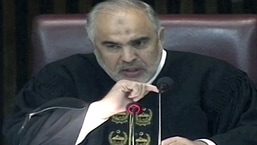
Prime Minister Imran Khan-led government in Pakistan on Saturday midnight has been ousted from power after Khan failed the no-confidence motion moved against him by the opposition, after a day-long political drama. Lower a member of Khan’s Pakistan Tehreek-e-Insaf party, house speaker Asad Qaisar, who had adjourned the house three times on Saturday, announced lower house Speaker Qaiser’s resignation, heightening the drama in the chamber. The prime minister’s supporters claim there is a foreign conspiracy to oust him.
-
Pak speaker Asad Qaiser, deputy speaker Qasim Suri quit amid political drama
Pakistan National Assembly speaker Asad Qaiser and deputy speaker Qasim Suri on Saturday night tendered their resignations amid an impasse over a parliamentary vote to oust Prime Minister Imran Khan. Khan tried to block a no-confidence motion last week and dissolved the lower house of parliament, but Pakistan’s top court ordered on Thursday the vote would have to be held by Saturday.
-
Imran Khan says Pakistan army chief Gen Bajwa not sacked: Reports
According to Geo News, which cited sources, Prime Minister Imran Khan told some journalists that he has no plans to make changes to the defence department. On Saturday night, army chief General Qamar Javed Bajwa met Khan amid an impasse over a parliamentary vote to oust the premier, two sources familiar with the matter told Reuters. When asked about the no-confidence motion, Khan repeated that he would not accept defeat at “any cost”.
-
-
No-trust vote yet; Pakistan SC may open doors at midnight: Top updates
Pakistan Prime Minister Imran Khan held an emergency meeting of his Cabinet on Saturday night, even though his government is expected to lose a no-confidence motion in the National Assembly. The National Assembly session to decide the fate of Khan via voting on a no-confidence motion against him stands adjourned yet again. It was expected to resume at 9.30pm (local time) after Isha prayers but appears to have been delayed.
[ad_2]
Source link
Journalist Details

Latest entries
 Latest NewsMarch 24, 2026Planning to Cancel Your Train Ticket? New Railways Rules Explained
 Brand StoriesMarch 24, 2026Shivam Muchhal: The Driving Force Behind SM Entertainment’s Rise as India’s Event Powerhouse
 Latest NewsMarch 23, 2026Sattankulam Case Verdict: Court Convicts Nine Police Personnel for Custodial Torture and Death
 Latest NewsMarch 19, 2026Public Outrage in Roopnagar: Negligence by Authorities or Public Mistake?