
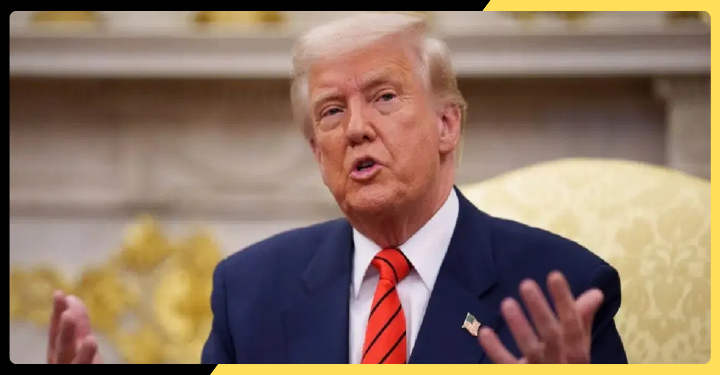
Global financial markets and international businesses are closely watching the latest trade policy announced by U.S. President Donald Trump, who has introduced new import duties targeting products linked to forced labor from approximately 60 trading partners. The announcement follows the expiration of the temporary 10% blanket tariff that had been imposed on a broad range of imported goods, signaling a major shift in the administration’s trade strategy.
The new measures are intended to focus enforcement on imports that allegedly benefit from exploitative labor practices rather than applying universal tariffs across all products. Administration officials argue that the updated policy reflects America’s commitment to fair competition, ethical sourcing, and stronger labor standards in global commerce.
The announcement immediately drew attention from investors, manufacturers, and multinational corporations that depend on international supply chains. Stock markets showed mixed reactions as analysts evaluated which industries would face the greatest exposure to the new duties. Companies heavily reliant on imported raw materials or finished products may experience increased operating costs if their suppliers become subject to the tariffs.
Economists note that the policy could accelerate a trend already underway among global businesses—diversifying supply chains to reduce dependence on any single country or production region. Many companies began shifting manufacturing operations during previous rounds of U.S.-China trade tensions, and the latest announcement may encourage additional investments in countries with stronger labor compliance records.
Industries expected to feel the greatest impact include apparel, footwear, consumer electronics, automotive components, furniture, and agricultural imports. These sectors often involve complex supply chains with multiple subcontractors, making labor verification more challenging.
The administration stated that importers will be expected to provide detailed documentation proving their products are not connected to forced labor. Customs authorities are expected to increase inspections, require additional certifications, and work with international partners to identify high-risk shipments. Businesses unable to demonstrate compliance may face higher import duties or delays at U.S. ports.
Financial experts believe companies with transparent sourcing systems will be better positioned to adapt to the new rules. Businesses that have already invested in digital supply chain monitoring, third-party audits, and ethical sourcing programs could gain a competitive advantage.
Meanwhile, international governments are assessing the implications of the U.S. decision. Some trading partners have indicated they will seek diplomatic discussions to clarify the scope of the policy, while others may consider challenging the measures through international trade mechanisms. Several governments argue that labor rights should be promoted through multilateral cooperation rather than unilateral tariffs.
Human rights organizations have generally welcomed stronger action against forced labor but caution that tariffs alone cannot eliminate labor exploitation. Advocacy groups say governments should combine trade enforcement with international cooperation, stronger labor inspections, and corporate accountability programs to achieve lasting improvements.
Retail organizations, however, have warned that supply chain adjustments could increase costs for businesses and consumers. Replacing suppliers often requires extensive product testing, contract negotiations, and compliance reviews, all of which can take months to complete. These additional costs may eventually be reflected in higher retail prices.
Trade analysts suggest the long-term success of the policy will depend largely on enforcement consistency. Clear guidance for businesses, transparent customs procedures, and reliable evidence linking imports to forced labor will be essential to maintaining confidence among importers and trading partners.
Some economists believe the targeted approach is more efficient than broad-based tariffs because it focuses enforcement on specific risks rather than affecting all imports equally. Others caution that determining whether forced labor exists within complex international supply chains remains a difficult and resource-intensive process.
As implementation begins, multinational corporations are expected to conduct comprehensive reviews of supplier relationships, strengthen due diligence procedures, and increase investments in compliance systems. Many businesses have already announced plans to reassess sourcing strategies to minimize regulatory risks.
The policy represents another important chapter in the evolving relationship between trade policy and human rights. Whether it succeeds in reducing forced labor while preserving stable international commerce will become clearer as businesses, governments, and consumers respond to the new regulatory environment in the months ahead.
Journalist Details

Latest entries
 Latest NewsSeptember 7, 2026Vijay Invokes Jayalalithaa’s Assembly Humiliation in Powerful Warning Against Misogyny
 World NewsSeptember 5, 2026Belgium PM Calls India a Key Partner as Europe Rethinks Global Dependencies
 World NewsSeptember 2, 2026Trump Warns Iran of Stronger Action as U.S.-Iran Conflict Explodes Again
 Latest NewsAugust 24, 2026India’s Space Startups Get PM Modi’s Backing as Government Eyes Global Leadership