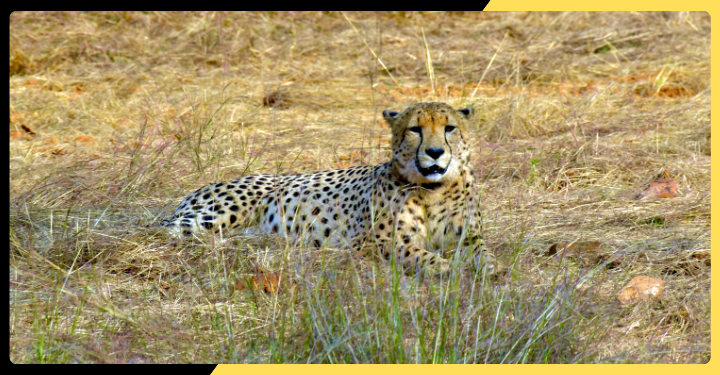
India’s ambitious Project Cheetah has suffered another blow after four newborn cheetah cubs died at Kuno National Park, sparking renewed debate over the future of the country’s wildlife reintroduction programme.
The cubs, approximately one month old, were discovered dead by forest officials during routine monitoring activities. They belonged to a female cheetah relocated from Africa under the Centre’s conservation initiative aimed at reviving the species in India after decades of extinction.
Authorities confirmed that veterinary experts have launched investigations into the deaths. While official reports are awaited, early assessments indicate that environmental stress, health complications, or extreme temperatures could have contributed to the tragedy.
The development has once again drawn national attention to the challenges associated with Project Cheetah. Since the first batch of cheetahs arrived in India, the programme has faced multiple hurdles, including deaths of adult animals, adaptation concerns, and ecological management issues.
Supporters of the project argue that wildlife reintroduction efforts across the world often encounter setbacks during the early phases. They maintain that breeding activity itself is evidence that the cheetahs are adapting to Indian conditions. However, critics say the repeated losses highlight gaps in habitat preparation and scientific oversight.
Kuno National Park was selected as the primary site for the project due to its grassland ecosystem and prey base. Authorities believed the reserve could support a stable cheetah population over time. Yet experts have repeatedly emphasized the need for larger landscapes, better climate adaptation measures, and long-term management planning.
The deaths of the cubs are particularly significant because breeding success is considered a key indicator of whether the species can establish itself sustainably in India. Conservationists had celebrated the birth of the cubs as proof that the project was moving in a positive direction.
Several wildlife experts have now called for an independent review of the programme. Concerns are being raised regarding veterinary facilities, heat management strategies, and the stress experienced by cheetahs in unfamiliar terrain. Some experts have also pointed to the increasing frequency of extreme weather events as a major challenge for wildlife conservation.
Officials from the forest department stressed that they are taking all necessary precautions to protect the remaining animals. Enhanced monitoring systems, additional veterinary checks, and increased field patrols are reportedly being implemented following the incident.
Public reaction to the deaths has been emotional, with many wildlife enthusiasts expressing disappointment on social media. The cheetah project had captured the imagination of people across the country as a symbol of ecological restoration and conservation ambition.
Despite criticism, government authorities continue to defend the programme as a long-term mission that requires time and patience. They argue that isolated setbacks should not overshadow the broader conservation goals associated with restoring biodiversity and strengthening India’s wildlife heritage.
The incident has also highlighted the delicate balance between scientific ambition and ecological realities. Reintroducing a species declared extinct in a region is among the most difficult tasks in wildlife conservation, requiring constant adaptation and learning.
As investigations continue, the deaths of the four cubs stand as a sobering reminder of the fragile nature of conservation efforts and the many uncertainties that accompany one of India’s most closely watched wildlife projects.
Journalist Details


- Jitendra Kumar is an Indian journalist and social activist from Hathras in Uttar Pradesh is known as the senior journalist and founder of Xpert Times Network Private Limited.
Latest entries