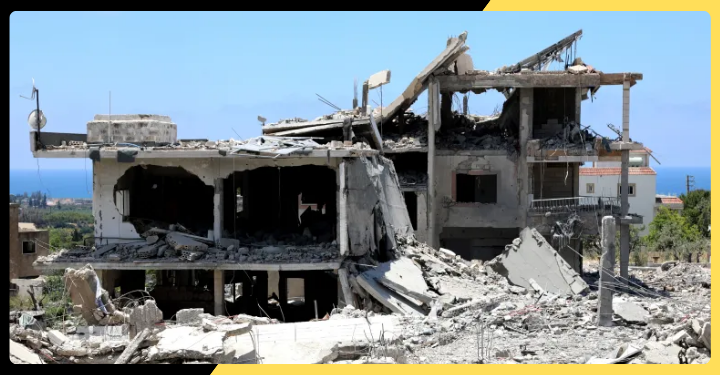
The Middle East is once again facing heightened uncertainty following Israeli airstrikes in Lebanon that reportedly killed 22 people and injured several others. The attacks have intensified regional tensions and raised concerns about the future of ongoing diplomatic efforts aimed at reducing conflict across the region. As governments react to the latest escalation, many observers fear that prospects for peace could become increasingly difficult to achieve.
The strikes occurred in southern Lebanon, a region that has frequently experienced military confrontations due to its proximity to the Israeli border. Israeli officials stated that the operation targeted security threats and was intended to prevent attacks against Israeli territory. Lebanese authorities, however, condemned the strikes and reported that civilian casualties were among the victims. The differing narratives surrounding the incident have fueled international debate and added to an already volatile situation.
The latest violence comes at a time when several diplomatic initiatives are underway. The United States and Iran have been engaged in indirect discussions concerning regional security issues and broader political concerns. Although these talks have progressed slowly, many diplomats viewed them as an important step toward reducing tensions. The sudden escalation in Lebanon now threatens to complicate those efforts and create new obstacles for negotiators.
Peace negotiations in the Middle East have historically been vulnerable to disruptions caused by military conflicts. Even when diplomatic channels remain open, outbreaks of violence often shift political priorities and strengthen groups that favor confrontation over compromise. As a result, incidents such as the recent strikes can have consequences that extend far beyond the immediate battlefield.
Regional governments are closely monitoring developments. Countries throughout the Middle East understand that localized clashes can rapidly evolve into broader confrontations involving multiple actors. In a region where alliances and rivalries are deeply interconnected, any significant escalation carries the risk of destabilizing neighboring countries and undermining years of diplomatic work.
For Lebanon, the consequences are particularly serious. The country continues to struggle with economic challenges, political divisions, and social pressures. Renewed conflict threatens to worsen these conditions and place additional burdens on communities already facing hardship. Local residents in affected areas have expressed concerns about safety, displacement, and the possibility of further military operations.
Israel, meanwhile, maintains that protecting its national security remains a top priority. Israeli leaders argue that military action is sometimes necessary to deter threats and prevent attacks against civilians. Supporters of this position contend that governments have a responsibility to respond when they perceive security risks. Critics, however, argue that military operations often contribute to cycles of retaliation and make long-term peace more difficult to achieve.
The international community has responded with calls for restraint. Several governments and international organizations have urged all parties to avoid actions that could further inflame tensions. Diplomatic representatives emphasize the importance of dialogue and caution against measures that might provoke a wider regional conflict. These appeals reflect growing concern that continued escalation could undermine stability across the Middle East.
The impact on US-Iran diplomacy is another key concern. Negotiations between Washington and Tehran were already facing significant challenges due to longstanding disagreements on regional policy and security matters. The Lebanon strikes may create additional pressure on both sides, making it harder to maintain momentum in talks. Political leaders could face increased domestic criticism if they continue negotiations while tensions remain high.
Analysts warn that the coming weeks may prove decisive. If military exchanges continue, the possibility of broader conflict will increase. On the other hand, successful diplomatic intervention could help contain the crisis and preserve ongoing negotiations. Much will depend on whether regional actors choose escalation or restraint in response to recent events.
The deaths reported in Lebanon serve as a reminder of the fragile balance that exists across the Middle East. While military actions may address immediate security concerns, they often carry long-term political and humanitarian consequences. As governments seek to navigate the latest crisis, the challenge will be finding a path that promotes stability without further deepening regional divisions. The future of peace efforts may depend on those choices.
Journalist Details


- Jitendra Kumar is an Indian journalist and social activist from Hathras in Uttar Pradesh is known as the senior journalist and founder of Xpert Times Network Private Limited.
Latest entries