India’s plan to establish integrated theatre commands is the culmination of more than two decades of strategic planning, military debate, and institutional reform. The proposal, now nearing government approval, represents one of the most ambitious transformations in the history of the Indian Armed Forces. Its journey began in the aftermath of the 1999 Kargil War, when shortcomings in coordination between the Army, Navy, and Air Force highlighted the need for a more unified military structure. Over the years, successive governments, defence experts, and military leaders have worked to refine the concept, making it a cornerstone of India’s long-term national security strategy.
The Kargil conflict was a defining moment for India’s defence establishment. Although the Indian Armed Forces successfully reclaimed strategic positions occupied by infiltrators, the conflict exposed weaknesses in intelligence sharing, joint planning, and operational coordination. Each military service functioned largely within its own command framework, making unified responses more difficult during a rapidly evolving crisis. These lessons prompted the government to undertake one of the most comprehensive reviews of India’s defence management system.
The Kargil Review Committee, headed by strategic affairs expert K. Subrahmanyam, examined the conflict in detail and recommended sweeping reforms to improve national security decision-making. Among its major findings was the need for stronger integration between the three services. The committee argued that future wars would require seamless cooperation among land, sea, and air forces rather than independent operations conducted under separate command structures.
Following the committee’s recommendations, the government established a Group of Ministers to evaluate defence reforms. The group’s report endorsed greater military integration and proposed measures to strengthen joint planning and command mechanisms. While several recommendations were implemented—including improvements in intelligence coordination and defence management—the idea of integrated theatre commands remained under discussion for many years due to differing operational priorities among the services.
One of the biggest challenges was balancing the distinct roles of the Army, Navy, and Air Force. The Army, with its large presence along India’s land borders, focused primarily on territorial defence and counter-insurgency operations. The Navy emphasized maritime security, protection of sea lanes, and strategic influence across the Indian Ocean. Meanwhile, the Air Force argued that air power is inherently flexible and should remain centrally controlled to allow rapid deployment across multiple theatres. Reconciling these perspectives required years of dialogue and careful planning.
The reform process gained fresh momentum with the appointment of General Bipin Rawat as India’s first Chief of Defence Staff (CDS) in January 2020. The creation of the CDS position itself was a landmark reform, intended to promote jointness among the armed forces and serve as the government’s principal military adviser on integrated operations. General Rawat made the establishment of theatre commands one of his highest priorities, frequently emphasizing that future conflicts would demand coordinated operations across land, sea, air, cyber, and space domains.
Under his leadership, detailed discussions began on restructuring India’s military into geographically and functionally integrated commands. Proposals included the creation of a Northern Theatre Command responsible for the border with China, a Western Theatre Command focused on Pakistan, and a Maritime Theatre Command overseeing naval operations in the Indian Ocean Region. Functional commands for logistics, air defence, and training were also examined as part of the broader modernization effort.
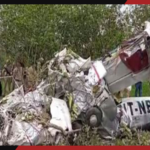
General Rawat’s untimely death in a helicopter crash in December 2021 temporarily slowed the reform process. However, the initiative continued under the Department of Military Affairs and subsequent military leadership. Extensive consultations were held to address concerns raised by each service regarding command authority, force allocation, and operational flexibility. Defence officials worked to ensure that the final structure would preserve the unique strengths of each branch while promoting greater integration.
The changing global security environment has further strengthened the case for theatre commands. Advances in technology have transformed the nature of warfare, making modern conflicts increasingly dependent on real-time intelligence, cyber operations, satellite surveillance, drones, electronic warfare, and precision-guided weapons. Military planners argue that these capabilities can only achieve their full potential when all services operate within a unified command framework capable of rapid decision-making and coordinated execution.
Regional security developments have also influenced India’s strategic thinking. Ongoing border tensions with China, continued security concerns involving Pakistan, and increasing geopolitical competition in the Indo-Pacific have underscored the need for a faster and more integrated military response. The Indian Ocean has become a region of growing strategic importance, requiring close coordination between naval, air, and land forces to protect maritime trade routes and national interests.
International military models have provided useful reference points throughout the reform process. The United States has long operated under unified combatant commands responsible for specific regions and missions, while China undertook a major restructuring of its military in 2016 by replacing traditional military regions with integrated theatre commands. Although India’s system will reflect its own strategic requirements and democratic decision-making process, these examples have demonstrated the operational advantages of joint command structures.
Supporters of the reform believe integrated theatre commands will enhance combat readiness, improve resource utilization, and streamline logistics by reducing duplication across services. Shared planning, joint procurement, and coordinated training could increase efficiency while enabling commanders to respond more quickly during crises. At the same time, experts caution that successful implementation will require sustained investment in communication networks, joint doctrine, and leadership development.
As the government moves closer to approving the theatre command plan, India stands on the threshold of one of the most significant defence transformations since Independence. The reform is not merely an administrative restructuring but a strategic evolution designed to prepare the armed forces for the demands of twenty-first-century warfare. After more than twenty years of discussion, consultation, and refinement, the vision first inspired by the lessons of Kargil may soon become a defining feature of India’s future military capability.
Journalist Details


- Jitendra Kumar is an Indian journalist and social activist from Hathras in Uttar Pradesh is known as the senior journalist and founder of Xpert Times Network Private Limited.
Latest entries