
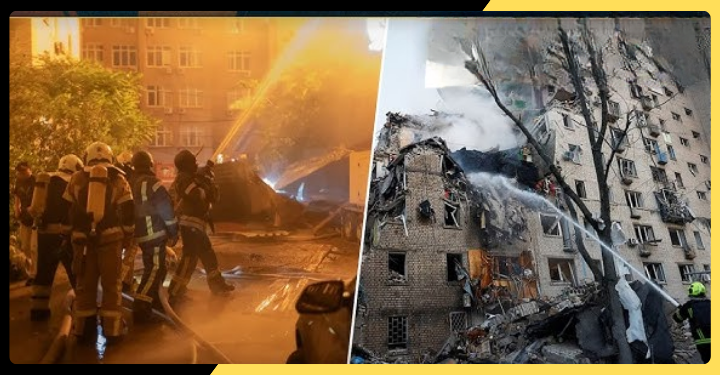
Emergency rescue teams worked through the night and into the following morning after a large-scale Russian missile and drone attack caused widespread destruction across Kyiv. As smoke continued to rise from damaged buildings, firefighters, paramedics, police officers, and search-and-rescue personnel launched urgent operations to locate survivors trapped beneath collapsed structures. The attack, which claimed at least eight lives and injured dozens more, left several residential neighborhoods in ruins and forced hundreds of families to evacuate their homes.
Within minutes of the first explosions, emergency services were dispatched to multiple locations across the Ukrainian capital. Rescue crews arrived to find apartment buildings with shattered walls, collapsed stairwells, and debris scattered across nearby streets. Flames engulfed parked vehicles and sections of residential complexes, creating dangerous conditions for first responders attempting to reach those trapped inside.
Search-and-rescue teams used heavy construction equipment to remove massive concrete slabs while carefully listening for signs of life beneath the rubble. Specially trained rescue dogs were deployed to detect survivors buried under collapsed buildings, while thermal imaging cameras helped identify areas where people might still be trapped. Every minute was critical, as emergency workers raced against time to save lives before injuries worsened or unstable structures collapsed further.
Firefighters battled multiple blazes that broke out after missile impacts damaged gas lines and electrical systems. Thick smoke reduced visibility, making rescue efforts even more challenging. Despite the dangerous conditions, crews continued working tirelessly, often risking their own safety to reach people calling for help from inside damaged buildings.
Medical teams established emergency treatment centers near several impact sites to provide immediate care before transporting the injured to hospitals across Kyiv. Ambulances moved continuously between affected neighborhoods and healthcare facilities, carrying patients suffering from burns, fractures, blast injuries, and trauma caused by falling debris. Doctors and nurses remained on emergency duty throughout the night as hospitals activated disaster response protocols to handle the sudden influx of casualties.
Residents who escaped unharmed also joined rescue efforts, helping neighbors clear debris, carry injured victims to ambulances, and distribute blankets, food, and drinking water to displaced families. Community volunteers organized temporary shelters for those whose homes had been destroyed or declared unsafe by structural engineers. Local charities and humanitarian organizations quickly mobilized to provide emergency assistance, including clothing, hygiene supplies, and psychological support for traumatized survivors.
Authorities cordoned off heavily damaged areas to prevent additional injuries from unstable buildings or unexploded missile fragments. Engineers began inspecting affected structures to determine whether repairs were possible or if complete demolition would be required. Utility workers also worked to restore electricity, water, and gas services after critical infrastructure sustained damage during the attack.
For many families, the rescue operation became an emotional wait for news about missing loved ones. Relatives gathered near emergency response zones, hoping for positive updates as workers continued searching through piles of concrete, twisted steel, and broken glass. Rescue officials regularly provided briefings, confirming successful rescues while warning that casualty figures could increase as operations progressed.
Witnesses described scenes of heartbreak and resilience throughout the city. Parents embraced children after being rescued from damaged buildings, while neighbors comforted one another amid the destruction. Volunteers delivered hot meals and refreshments to exhausted emergency workers who had spent hours digging through rubble without rest.
Government officials praised the professionalism and dedication of Ukraine’s emergency services, noting that years of responding to missile attacks have strengthened coordination between firefighters, police, medical teams, and civil defense agencies. However, they emphasized that no emergency system can completely eliminate the devastating human impact of repeated attacks on civilian areas.
As daylight revealed the full scale of the destruction, cleanup operations began alongside ongoing rescue efforts. Heavy machinery removed debris from blocked roads, while municipal workers started repairing damaged public infrastructure. Although rebuilding will take time, city authorities pledged to restore essential services as quickly as possible and provide housing assistance for families displaced by the attack.
The overnight operation demonstrated both the immense challenges facing Kyiv’s emergency responders and the resilience of its residents. While the physical scars of the strike will remain visible for months, the determination of rescue workers and ordinary citizens to help one another reflected the city’s resolve to endure despite the continuing dangers of war.
Journalist Details

- Jitendra Kumar is an Indian journalist and social activist from Hathras in Uttar Pradesh is known as the senior journalist and founder of Xpert Times Network Private Limited.
Latest entries
 World NewsSeptember 10, 2026Russian IL-76 Among Three Aircraft Landing at Noida Airport Ahead of Putin’s Visit
 NewsSeptember 9, 2026Strait of Hormuz Becomes Flashpoint as US and Iran Trade Naval Strikes
 Latest NewsSeptember 8, 2026King’s Letter Shocks Sussexes: Why Harry and Meghan’s Royal Future Is Back in Focus
 Latest NewsSeptember 6, 2026Before the Big SIR Cleanup, 11 Lakh Delhi Voters Had Already Disappeared From Electoral Rolls